
Overview
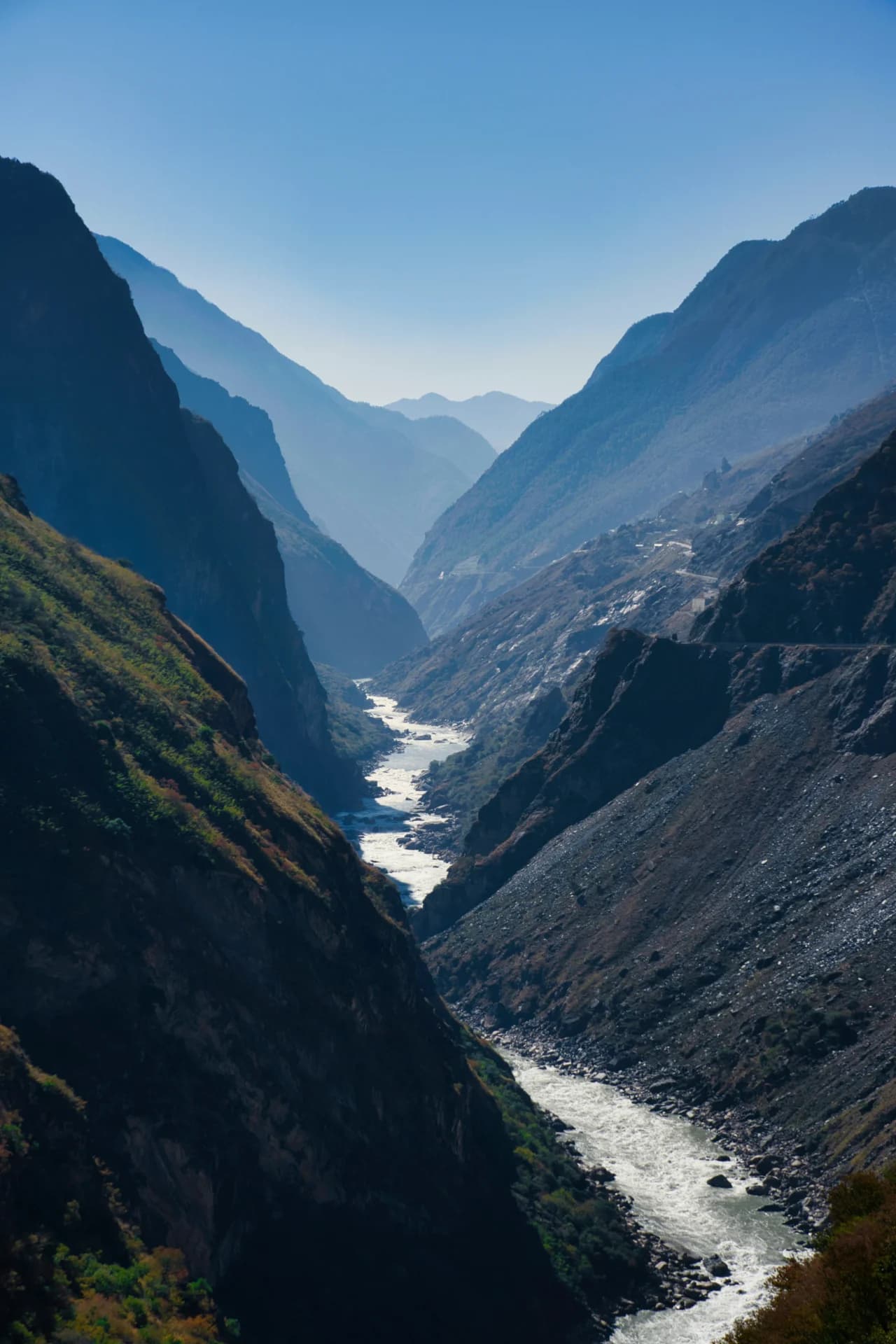
You're standing on a trail carved into a cliff face 2,000 meters above the Jinsha River, which roars through a gap so narrow that—according to legend—a tiger once leaped across it to escape a hunter. Below you, the river churns through rapids. Above you, Jade Dragon Snow Mountain rises to 5,596 meters. Across the gorge, Haba Snow Mountain reaches 5,396 meters. The vertical distance from river to peaks exceeds 3,900 meters—making this one of the deepest gorges on Earth.
Tiger Leaping Gorge (虎跳峡, Hǔtiào Xiá) has become one of China's most celebrated treks: a two-day hike through dramatic mountain scenery, staying overnight in cliffside guesthouses, with views that rival anywhere in the Himalayas. The trail follows the ancient Tea Horse Road path, passing through Naxi villages and traversing the famous "28 Bends"—a grueling but rewarding climb to the highest point of the trek.
This isn't a technical climb—no ropes or special equipment needed—but it is a serious hike with significant altitude (2,000–2,670m), steep sections, and exposure to drop-offs. The reward is two days of world-class scenery, genuine adventure, and the satisfaction of completing one of Asia's great walks.
Quick Facts at a Glance
| Item | Details |
|---|---|
| Location | Between Lijiang and Shangri-La, Yunnan Province |
| Length | 22 km high trail (hiking route) |
| Duration | 2 days / 1 night (classic route) |
| Elevation | 1,800m (river) to 2,670m (high point) |
| Difficulty | Moderate to challenging |
| Best Season | March–May, September–November |
| Entry Fee | ¥45 |
| Starting Point | Qiaotou Town (桥头镇) |
Understanding the Trek: Routes and Options
Tiger Leaping Gorge offers several ways to experience it, from quick roadside viewpoints to the full two-day high trail trek. Here's how to choose your adventure.
The High Trail (Upper Path) — The Classic Trek
This is the famous Tiger Leaping Gorge hike—a 22km trail carved into the mountainside high above the river. The route connects Qiaotou (桥头) to Tina's Guesthouse or Walnut Garden, with overnight stays at mountain guesthouses.
| Aspect | Details |
|---|---|
| Distance | ~22 km |
| Duration | 2 days / 1 night |
| Elevation range | 1,800m to 2,670m |
| Difficulty | Moderate to challenging |
| Highlights | 28 Bends, Halfway Guesthouse views, cliffside trail |
Who it's for: Fit hikers seeking adventure and world-class scenery. You need reasonable fitness but no technical climbing skills.
The Low Road — Drive-Through Option
A paved road runs along the lower gorge, allowing visitors to see the main viewpoints without hiking. Tour buses follow this route.
| Aspect | Details |
|---|---|
| Duration | 2–4 hours by vehicle |
| Viewpoints | Upper, Middle, and Lower Tiger Leaping Stones |
| Difficulty | Easy (minimal walking) |
| Experience | See the gorge, but miss the high trail magic |
Who it's for: Visitors with limited time, mobility issues, or no interest in serious hiking.
Middle Tiger Leaping Stone Side Trip
From the low road, you can descend steep steps to the Middle Tiger Leaping Stone—the actual rock the legendary tiger supposedly used as a stepping stone. This involves climbing down (and back up) about 1,000 steps.
| Aspect | Details |
|---|---|
| Duration | 1.5–2 hours round trip |
| Steps | ~1,000+ down and up |
| Fee | ¥20 (separate from main entry) |
| Worth it? | Yes, if you want to see the most dramatic rapids up close |
The Two-Day High Trail Trek: Complete Guide
The high trail is the reason hikers come from around the world. Here's everything you need to know to plan and complete the classic two-day trek.
Day 1: Qiaotou to Halfway Guesthouse (6–7 hours)
Overview: The harder of the two days, featuring the infamous "28 Bends"—a steep zigzag climb of roughly 400 meters that tests your legs and lungs. After the climb, you're rewarded with cliff-edge walking and some of the trek's best views.
Route breakdown:
| Section | Distance | Time | Notes |
|---|---|---|---|
| Qiaotou to Naxi Family Guesthouse | 5 km | 1.5–2 hr | Gradual climb, village scenery |
| 28 Bends climb | 2 km | 1.5–2 hr | Steep switchbacks, most challenging section |
| 28 Bends to Tea Horse Guesthouse | 4 km | 1.5 hr | Cliff-edge trail, spectacular views |
| Tea Horse to Halfway Guesthouse | 3 km | 1 hr | Relatively flat, dramatic gorge views |
The 28 Bends: The notorious climb—28 switchbacks gaining roughly 400 meters. Start early when it's cool. Take breaks. The views get better with every bend. At the top, you'll feel the accomplishment.
Overnight: Most hikers stay at Halfway Guesthouse (中途客栈) or nearby Tea Horse Guesthouse. Basic but comfortable rooms, hot showers, restaurant with views, cold beer to celebrate your climb.
Day 2: Halfway Guesthouse to Tina's / Walnut Garden (4–5 hours)
Overview: An easier day with more gradual terrain, ending at Tina's Guesthouse or continuing to Walnut Garden village. The path continues along cliff edges with constant gorge views.
Route breakdown:
| Section | Distance | Time | Notes |
|---|---|---|---|
| Halfway to Tina's Guesthouse | 6 km | 2.5–3 hr | Cliff trail, some ups and downs |
| Optional: Tina's to Middle Tiger Leaping Stone | 2 km | 1–1.5 hr | Steep descent to viewpoint |
| Optional: Continue to Walnut Garden | 3 km | 1 hr | If continuing to Shangri-La |
End point options:
- Tina's Guesthouse: Most common endpoint. Buses back to Lijiang. Access to Middle Tiger Leaping Stone.
- Walnut Garden (核桃园): Quieter village, better if continuing to Shangri-La.
What to Expect on the Trail
Trail conditions:
- Well-marked path (follow red arrows and paint marks)
- Mix of dirt, rock, and occasional concrete sections
- Some exposed cliff edges (stay focused)
- Loose rocks in sections (hiking poles helpful)
Facilities:
- Basic guesthouses with rooms, restaurants, and toilets every few hours
- Simple meals (Chinese food, Western breakfast at some places)
- Bottled water and snacks for sale along the route
- No ATMs on trail—bring enough cash
Wildlife:
- Domestic animals (goats, horses, dogs) on the trail
- Birds of prey riding thermals above the gorge
- The occasional snake (rare, but watch where you step)
Planning Your Trek: When to Go, What to Bring
Proper planning makes Tiger Leaping Gorge enjoyable rather than miserable. Here's what you need to know.
Best Times to Trek
Spring (March–May) ⭐⭐⭐⭐⭐ Clear skies, wildflowers blooming, comfortable temperatures, snow still visible on peaks. The best season for most hikers.
Autumn (September–November) ⭐⭐⭐⭐⭐ Clear skies, golden light, comfortable temperatures. Slightly busier than spring but excellent conditions.
Summer (June–August) ⭐⭐⭐ Rainy season—expect afternoon showers, muddy trails, and reduced visibility. Waterfalls are at their best. Possible landslides after heavy rain—check conditions.
Winter (December–February) ⭐⭐⭐ Cold at altitude (0–10°C), but dry and clear. Fewer hikers. Some guesthouses may be closed. Check trail conditions.
What to Pack
Essential:
- Sturdy hiking shoes/boots (ankle support recommended)
- Daypack (20–30L sufficient)
- Rain jacket (essential in summer, wise year-round)
- Water bottle (refill at guesthouses)
- Sunscreen and hat (high altitude = strong UV)
- Cash (¥300–500 for fees, accommodation, food)
- Phone/camera (charged, with portable charger)
- Basic first aid (blister kit, pain relievers)
Recommended:
- Hiking poles (especially helpful on steep sections)
- Layers (temperature varies significantly)
- Headlamp (in case you're hiking at dusk)
- Snacks (trail food available but limited selection)
Leave behind:
- Heavy backpacks (guesthouses provide bedding)
- Unnecessary electronics
- Valuables you'd worry about
Fitness Requirements
You don't need to be an athlete, but you do need reasonable fitness:
- Able to walk 6–8 hours with breaks
- Comfortable with sustained uphill climbs
- OK with some exposure (cliff edges, drop-offs)
- No serious knee or ankle problems
If you're unsure: The 28 Bends climb is the test. If you can climb 400 meters (roughly 80 flights of stairs) with a light pack, you can do this trek.
Altitude Considerations
The trail reaches 2,670m—high enough that altitude can affect some people:
- If coming directly from sea level, consider a night in Lijiang (2,400m) first
- Stay hydrated
- Watch for symptoms: headache, unusual fatigue, nausea
- The trek stays below 3,000m, so serious altitude sickness is rare
Getting There and Back
Tiger Leaping Gorge sits between Lijiang and Shangri-La. Here's how to reach the trailhead and return after your trek.
Getting to Qiaotou (Trek Start)
From Lijiang:
- Bus: Regular buses from Lijiang Bus Station, 2–2.5 hours, ¥35–50. Buses run throughout the day.
- Private car/taxi: 2 hours, ¥300–400. More flexible timing.
- Tour package: Many Lijiang hostels arrange transport + accommodation packages.
From Shangri-La:
- Bus: 2 hours, ¥30–40. Start from the opposite direction.
- If hiking from Shangri-La, you'd do the trail in reverse (Walnut Garden to Qiaotou).
Getting Back After the Trek
From Tina's Guesthouse:
- Buses pass on the low road—flag one down or have your guesthouse arrange it
- Back to Lijiang: 2 hours, ¥35–50
- On to Shangri-La: 2 hours, ¥30–40
From Walnut Garden:
- Slightly more remote but buses still pass
- More convenient if continuing to Shangri-La
Luggage Storage
Don't carry your full travel backpack on the trek:
- Leave luggage at your Lijiang/Shangri-La hotel
- Or use luggage transfer services (some guesthouses arrange transport of bags between endpoints)
- Carry only what you need for two days
Accommodation on the Trail
Cliffside guesthouses are part of the Tiger Leaping Gorge experience. Here's where to stay.
Main Guesthouse Options
Naxi Family Guesthouse (纳西雅阁) Location: Early on trail, before 28 Bends Best for: Those wanting a shorter first day or late start Rooms: Basic, ¥50–100
Tea Horse Guesthouse (茶马客栈) Location: Just after 28 Bends Best for: Celebrating the climb with a view Rooms: Basic to mid-range, ¥80–150
Halfway Guesthouse (中途客栈) ⭐ Most Popular Location: Roughly halfway point, spectacular position Best for: Classic trek itinerary, best views Rooms: Basic to mid-range, ¥80–200
Tina's Guesthouse Location: Near trek end, on low road Best for: End of hike, bus connections Rooms: More developed, ¥100–200
What to Expect
Rooms: Simple but clean. Private rooms with basic beds. Some have en-suite bathrooms; some share facilities. Hot showers usually available.
Food: Chinese meals (noodles, rice dishes, stir-fry). Basic Western breakfast at some places. Cold beer and soft drinks. Don't expect gourmet—expect fuel.
Atmosphere: Social—hikers from around the world sharing trail stories, comparing notes, planning next adventures. Part of the experience.
Booking: Not usually necessary except during Chinese holidays. Walk up and ask. Bring cash.
Safety and Practical Considerations
Tiger Leaping Gorge is a real mountain environment. Here's how to stay safe.
Trail Safety
- Stay on marked trail: Red arrows and paint marks guide the way. Don't take shortcuts.
- Watch your footing: Loose rocks and uneven terrain are common. One twisted ankle ends your trek.
- Respect cliff edges: Some sections have significant exposure. Stay focused; don't get distracted by photos.
- Start early: Afternoon storms are common in summer. Better to be at your guesthouse by mid-afternoon.
- Don't hike alone: Solo hiking is possible but joining others is safer. Guesthouses can help match hikers.
Weather Hazards
- Rain: Trails become slippery and muddy. Landslide risk increases. Check conditions if recent heavy rain.
- Heat: Summer afternoons get hot. Carry water, wear sun protection, take breaks.
- Cold: Winter mornings and high points can be cold. Layers are essential.
If Something Goes Wrong
- Minor injury: Guesthouses have basic supplies. Continue if able.
- Major injury: Stay put, send for help via guesthouse or other hikers. Evacuation is difficult—prevention is better than rescue.
- Lost: Follow water downhill to reach the low road. Ask locals for directions.
- Emergency contacts: Guesthouses can coordinate help. Having a local SIM helps.
Insurance
Standard travel insurance should cover trekking at this altitude and difficulty level. Verify your policy covers:
- Medical evacuation
- Trip interruption
- Outdoor activities / trekking
Beyond the Classic Trek: Extensions and Alternatives
The two-day high trail is the classic experience, but there are other ways to explore the gorge.
One-Day Express Options
Hiking option: Start very early, hike the full high trail in one long day (10–12 hours). Exhausting but possible for fit hikers.
Drive + short hike: Drive to Middle Tiger Leaping Stone viewpoint (2 hours from Lijiang), hike down to the stone and back (2 hours), return to Lijiang. See the gorge without the full trek.
Three-Day Extended Trek
Continue from Walnut Garden to Baishuitai (白水台)—terraced white mineral pools—adding a third day of hiking. Then bus to Shangri-La.
Lijiang to Shangri-La Traverse
Use Tiger Leaping Gorge as part of a one-way journey:
- Day 1: Lijiang to Qiaotou, start hiking
- Day 2: Complete trek to Walnut Garden
- Day 3: Bus from Walnut Garden to Shangri-La
This is more efficient than returning to Lijiang.
Combining with Other Yunnan Destinations
Tiger Leaping Gorge sits perfectly between Lijiang and Shangri-La. Here's how it fits into a Yunnan itinerary.
Suggested Itineraries
5 Days Lijiang + Tiger Leaping Gorge:
- Day 1: Arrive Lijiang, explore old town
- Day 2: Jade Dragon Snow Mountain day trip
- Day 3: Bus to Qiaotou, hike to Halfway Guesthouse
- Day 4: Complete trek, bus back to Lijiang
- Day 5: Lijiang departure
7 Days Lijiang → Gorge → Shangri-La:
- Days 1–2: Lijiang (old town, Jade Dragon Snow Mountain)
- Day 3: Bus to Qiaotou, hike to Halfway
- Day 4: Complete trek to Walnut Garden
- Day 5: Bus to Shangri-La, explore Dukezong Old Town
- Day 6: Songzanlin Monastery, Pudacuo National Park
- Day 7: Shangri-La departure (or return to Lijiang/Kunming)
10 Days Yunnan Circuit:
- Days 1–2: Kunming (Stone Forest)
- Days 3–4: Dali (old town, Erhai Lake)
- Days 5–6: Lijiang
- Days 7–8: Tiger Leaping Gorge trek
- Days 9–10: Shangri-La
Planning Your China Trip
- How much does it cost? — Complete breakdown of daily budgets, attraction fees, and transport costs across China
- Is China safe? — Safety overview covering health, transport, and adventure activities across China
- Essential tips for first-timers — Apps to download, payment setup, cultural etiquette, and common mistakes
About This Guide
This guide was written by the Gopagoda Travel team based on multiple treks through Tiger Leaping Gorge across different seasons. Trail conditions, guesthouse availability, and transport schedules can change—verify current conditions locally, especially during rainy season.