
Nanjing Road Ultimate Guide: Everything You Need to Know (2026)
Written by: Wang Xiaomei (王晓梅) - Shanghai Urban Culture Expert Affiliation: GoPagoda Travel Expertise: Shanghai Commercial History, Haipai Culture, Urban Development Experience: 18+ years, specialized in Shanghai's commercial districts and modern history
Last Updated: January 28, 2026 Fact-Checked: January 2026 Reading Time: 12 minutes
Overview
Nanjing Road (南京路 Nánjīng Lù) is Shanghai's premier shopping thoroughfare and one of the world's busiest commercial streets, stretching 5.5 kilometers from the Bund waterfront in the east to Jing'an Temple in the west. This iconic boulevard is divided into two distinct sections with very different characters:
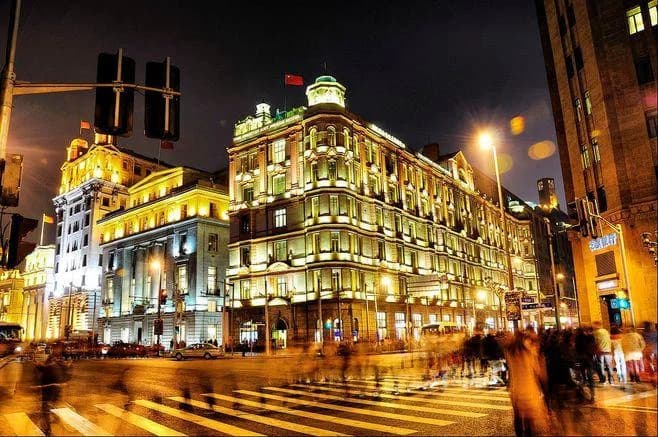
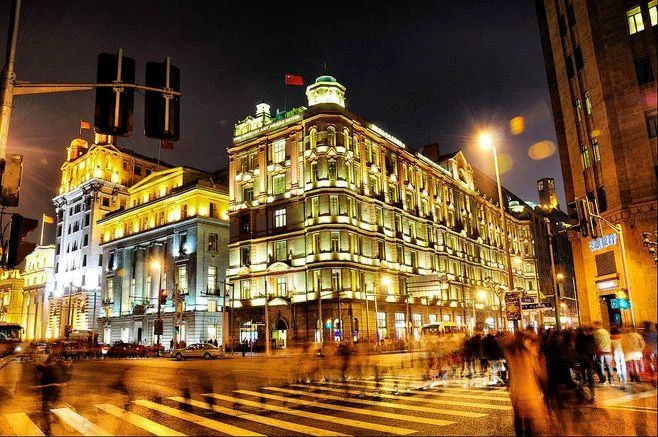
East Nanjing Road (Nanjing Dong Lu, 南京东路) is a 1.2 km pedestrian mall from the Bund to People's Square, featuring neon signs, LED billboards, historic department stores from the 1920s-30s (including the famous No. 1 Department Store from 1936), mid-range retail shops, street food vendors, and quirky trackless sightseeing "trains." In 2024, the pedestrian street received 102 million visitors (1.02亿人次 annually), with summer daily visitor counts exceeding 400,000 and holiday periods drawing 200,000-230,000 cumulative visitors. The street's historical peak reached 1 million daily visitors during regular periods, and on Millennium Eve (December 31, 1999), it set a world record with 3 million visitors in a single night, creating a bustling, touristy atmosphere that epitomizes Shanghai's commercial energy.
West Nanjing Road (Nanjing Xi Lu, 南京西路) is a luxury shopping boulevard from People's Square to Jing'an Temple, lined with international flagship stores (Prada, Louis Vuitton, Hermès, Cartier), upscale mega-malls (Plaza 66, CITIC Square, Westgate Mall), five-star hotels (Portman Ritz-Carlton, JW Marriott), and fine dining restaurants. This sophisticated section offers a more refined shopping experience with fewer crowds and higher prices.
Originally a narrow lane in the British Concession called Park Lane (花园弄, established 1851 during Qing Xianfeng 1st year, 清咸丰元年), Nanjing Road became China's foremost commercial street by the 1920s-30s golden age, housing Asia's first department stores including:
- Sincere Department Store (先施百货) - October 20, 1917, founded by Ma Yingbiao
- Wing On Department Store (永安百货) - September 5, 1918, founded by Guo Le and Guo Quan
- Sun Sun Company (新新百货) - January 23, 1926, founded by Li Minzhou and Liu Xiji
- Sun Company (大新公司, later No. 1 Department Store) - January 10, 1936, founded by Cai Chang
These pioneering retailers introduced modern consumer culture to China—fixed prices (no bargaining), escalators (Sun Company installed Shanghai's first escalators in 1936), air conditioning, floor-by-floor shopping, and professional customer service. The four department stores competed to offer the most luxurious shopping experience, transforming Nanjing Road into "China's Fifth Avenue."
Today Nanjing Road generates over ¥10 billion ($1.4 billion) in annual retail sales, maintaining its status as China's most famous shopping destination. While touristy and commercialized, the street remains an iconic Shanghai experience—the neon atmosphere, historic department stores, and sheer energy are quintessentially Shanghai, blending Chinese and Western commercial cultures in a way unique to this city.
Quick Answers
"Is Nanjing Road free to visit?"
Yes! Nanjing Road is a public street completely free to walk and explore 24/7. The pedestrian section (East Nanjing Road) is car-free and open to all at no cost. Individual stores, restaurants, and attractions along the street have their own prices and hours. You can window shop, take photos, and enjoy the atmosphere without spending money—though the street's purpose is, of course, shopping and dining.
"What's the best time to visit Nanjing Road?"
Evening (7:00-9:00 PM) offers the most vibrant atmosphere when neon signs and LED billboards are illuminated and crowds create bustling energy. For photography without crowds, arrive early morning (7:00-9:00 AM) on weekdays. Avoid weekends (peak hours: 9:00-11:00 AM, 4:00-6:00 PM) and Chinese holidays when crowds become extremely dense. Weekdays, especially mornings or late evenings (after 8:30 PM), are 40-50% less crowded, making for a more comfortable experience. Best overall timing: weekday evenings 7:00-8:30 PM for atmosphere without overwhelming crowds.
"Is Nanjing Road worth visiting?"
Yes, but manage expectations. It's touristy and commercialized, offering better window shopping than actual shopping value (better deals found elsewhere in Shanghai). Visit for the atmosphere, people-watching, historic department stores, and iconic Shanghai experience rather than serious shopping. The neon nighttime atmosphere is genuinely spectacular. Combine with a Bund visit (10-minute walk) for a classic Shanghai day.
Quick Facts at a Glance
Street Access
- Public street open 24/7 year-round
- Free to walk, photograph, and explore
- Individual stores: typically 10:00 AM - 10:00 PM
- Restaurants and bars: varying hours
Location & Length
- East Nanjing Road: 1.2 km pedestrian section (Bund to People's Square)
- West Nanjing Road: 4.3 km luxury boulevard (People's Square to Jing'an Temple)
- Total length: 5.5 km
- Flat, accessible pedestrian walkway (East section car-free)
Getting There
- Metro Lines 2 & 10: East Nanjing Road Station (pedestrian section east end)
- Metro Lines 1, 2 & 8: People's Square Station (pedestrian section west end/central)
- Metro Lines 2 & 7: Jing'an Temple Station (West Nanjing Road terminus)
- Multiple bus routes along entire street
Best Time to Visit
- Evening (6:00-9:00 PM) for neon lights and bustling atmosphere
- Early morning (7:00-9:00 AM) for uncrowded photography
- Spring (March-May) and Autumn (Sep-Nov) for comfortable weather
- Avoid weekends and Chinese holidays (extremely crowded)
Expected Walking
- 1.2 km pedestrian mall (20-30 minutes at normal pace)
- 5.5 km full length (1.5-2 hours if walking entire street)
- Flat pavement, comfortable shoes recommended
What to See and Do on Nanjing Road
Nanjing Road offers two distinct experiences: the touristy East pedestrian mall with historic department stores and neon signs, and the sophisticated West luxury boulevard with international brands. This guide helps you prioritize based on your interests.
East Nanjing Road Pedestrian Mall - The Tourist Experience
China's Most Famous Shopping Street (1.2 km Car-Free Zone)
The 1.2 km pedestrian section from the Bund to People's Square represents the classic Nanjing Road experience—a bustling, neon-lit shopping parade that received 102 million visitors in 2024 (averaging approximately 280,000 daily). Pedestrianized in September 20, 1999, this car-free zone features historic department stores, mid-range retail shops, street food vendors, and the quirky trackless sightseeing "trains" (¥5 per ride, touristy but fun). During summer peak season, daily visitor counts exceed 400,000, while holiday periods see cumulative crowds of 200,000-230,000. The street's historical peak reached 1 million daily visitors, and on Millennium Eve (December 31, 1999), it set a world commercial street record with 3 million visitors in a single night.
What to experience: The sheer energy and crowds (especially evenings and weekends), neon signs and LED billboards creating the iconic Shanghai commercial atmosphere, street performers and vendors, and the contrast between 1930s Art Deco department stores and modern retail shops. This is people-watching at its finest.
Historical significance: This street segment represents the heart of Shanghai's commercial transformation from 1920s-30s golden age through Communist era nationalization to 1990s-2000s economic reforms. The mix of historic and modern retail tells Shanghai's commercial evolution story.
Best for: First-time visitors wanting the iconic Nanjing Road experience, photography (especially evening neon atmosphere), people-watching, and quick street food snacks. Not ideal for serious shopping—better value found elsewhere.
Photography tip: Evening (7:00-9:00 PM) when illuminated signs create spectacular atmosphere. Shoot from elevated positions (pedestrian overpasses) for crowd perspectives. Wide-angle lens captures both street and neon signs.
Time needed: 1-2 hours for walking and window shopping
Shanghai No. 1 Department Store - Historic Retail Landmark
The Largest of the Big Four (Opened January 10, 1936)
Originally named Sun Company (大新公司 Dàxīn Gōngsī), this architectural landmark at 800 East Nanjing Road represents the grandest of the "Big Four" department stores built during Shanghai's golden age. Opening on January 10, 1936, it was hailed as the "Far East's Largest Department Store" and won the "Best Asian Architecture Design Award" for its sophisticated design and unprecedented scale.
Architectural Specifications:
- 10 stories (including 1 underground floor)
- 17,000 square meters of retail space (basement through 3rd floor)
- 5 elevators (including 1 freight elevator)
- 2 escalators imported from Otis Company (USA) - Shanghai's first automatic escalators
- Innovative floor-by-floor product organization by category
- Air conditioning throughout (extremely rare in 1930s China)
Historical significance: Founded by overseas Chinese businessman Cai Chang (蔡昌), Sun Company pioneered revolutionary retail concepts in China: fixed-price shopping (一口价 "yi kou jia," eliminating traditional bargaining culture), escalator shopping experience (first in Shanghai), professional uniformed sales staff with customer service training, and Western-style floor-by-floor department organization. The building's scale and modernity shocked 1930s Shanghai—it was the tallest commercial building on Nanjing Road and featured amenities previously unseen in Chinese retail.
Why visit: The building itself is an Art Deco architectural treasure with preserved 1930s facade and the historic Otis escalators still operating. Inside, the store maintains its historic 10-story layout while selling affordable fashion, cosmetics, souvenirs, snacks, and daily goods. The rooftop offers views of Nanjing Road's pedestrian mall and crowds below. This is one of the few surviving pre-1949 department stores still operating in its original function.
What it's like today: More time capsule than luxury shopping—expect affordable Chinese brands rather than international labels. Ground floor sells cosmetics, snacks, and Shanghai souvenirs. Upper floors feature fashion, home goods, and electronics. Fixed prices (no bargaining). The value is the experience and history rather than the products. The original escalators remain functional—riding them is like stepping into 1936 Shanghai.
Photography tip: Photograph the Art Deco exterior from across the pedestrian street. Interior photography allowed—capture the vintage escalators and historic layout. Rooftop viewing area offers aerial perspectives of crowds below.
Practical tips: Free to enter and browse. Affordable Shanghai souvenirs and snacks on ground floor. Historic interior worth seeing even if not shopping. Can be crowded during weekends and holidays.
Time needed: 30-45 minutes
Shanghai Yongan Department Store - Art Deco Gem
Wing On Department Store (Opened September 5, 1918)
This magnificent eclectic-style (折衷主义风格) landmark at 635 East Nanjing Road features one of Shanghai's most distinctive Art Deco facades. Originally Wing On Department Store (永安百货 Yǒng'ān Bǎihuò), founded by Guo Le and Guo Quan (郭乐、郭泉), Chinese-Australian businessmen, it officially opened on September 5, 1918, establishing itself as one of the pioneering Big Four that defined Shanghai's golden age retail culture.
Architectural Specifications:
- 6 stories high, with partial 7-story sections
- Eclectic architectural style blending Western and Chinese design elements
- 10 large glass display windows along Nanjing Road facade
- 3 main entrances featuring Ionic column porticos (爱奥尼克柱式大门)
- Two-story tower pavilion at rooftop called "Yiyun Pavilion" (倚云阁 "Leaning on Clouds Pavilion")
- Cast iron balustrades and balconies on 2nd floor and above
- Original construction began April 1916, completed September 1918
Historical Expansion:
- 1933: Built 22-story Wing On New Tower (永安新厦) between Zhejiang Road and Hubei Road, becoming one of Shanghai's first skyscrapers
- 1946: Purchased land property rights for $1.125 million USD (original land belonged to Jewish businessman Silas Hardoon/哈同)
- 1966: Renamed "Dongfanghong Department Store" (国营东方红百货商店 "State-owned East is Red Department Store") during Cultural Revolution
- 1969: Changed to "Shanghai No. 10 Department Store" (上海市第十百货商店)
- 1988: Renamed "Shanghai Hualian Department Store" (上海华联商厦)
- 2005: Restored original name "Wing On Department Store" (永安百货)
Why visit: The architectural exterior—especially the Ionic columns, glass display windows, and distinctive rooftop tower pavilion—exemplifies the eclectic style that defined 1920s-30s Shanghai. The building showcases the ambition of Chinese-Australian entrepreneurs who brought modern retail concepts from Sydney to Shanghai. The cast iron balustrades and balconies represent some of the finest preserved metalwork from the Republican Era.
What it's like today: Now a mid-range department store selling fashion, cosmetics, electronics, and daily goods. Targets local shoppers rather than tourists. Less renovated than No. 1 Department Store, giving it a more authentic "time warp" feeling. Fixed prices, no bargaining.
Historical note: Wing On pioneered many retail innovations in China: first escalators in Chinese retail (installed in 1920s), first air-conditioned shopping floors, first uniformed sales staff with professional customer service training. The rooftop once featured an amusement park, tea garden, and entertainment venues—making it a social destination for Shanghai families, not merely a shopping location. The 1933 Wing On New Tower (22 stories) next door further demonstrated the company's modernization ambitions.
Photography tip: Best photographed from across the street to capture the full Art Deco facade, green tiles, and clock tower. Morning or late afternoon light highlights architectural details. Interior less photogenic but historic elevators worth documenting.
Time needed: 20-30 minutes (exterior viewing and brief interior walk)
West Nanjing Road Luxury District - Upscale Shopping
Shanghai's Rodeo Drive (People's Square to Jing'an Temple)
West Nanjing Road transforms from the touristy pedestrian mall into a sophisticated luxury shopping boulevard lined with international flagship stores (Louis Vuitton, Hermès, Prada, Cartier, Tiffany), upscale mega-malls (Plaza 66, CITIC Square, Westgate Mall), five-star hotels (Portman Ritz-Carlton, JW Marriott), and fine dining restaurants.
Why visit: If you're interested in luxury shopping or window shopping, this is Shanghai's premier luxury retail corridor—less crowded and more sophisticated than East Nanjing Road. The street also showcases Shanghai's modern economic success with gleaming malls and upscale ambiance. Even if not buying, the flagship store interiors and mall architecture are impressive.
What to see: Plaza 66 (Henglong Plaza) is the most upscale mall with 200+ international luxury brands. CITIC Square features modern architecture and high-end retail. Portman Ritz-Carlton and JW Marriott offer hotel lobbies worth seeing. The boulevard itself is lined with plane trees (imported from France in early 1900s), creating a European-style shopping street atmosphere.
Compared to East Nanjing Road: Far less crowded (50-70% fewer people), cleaner, quieter, more expensive, and more international. West is for serious shoppers or luxury window shopping; East is for atmosphere and people-watching. West has fewer historic buildings but more modern commercial architecture.
Photography tip: Flagship store window displays make excellent subjects, especially evening when illuminated. The tree-lined boulevard offers classic shopping street perspectives. Interiors of Plaza 66 and CITIC Square feature modern architecture worth photographing.
Time needed: 1-2 hours for window shopping and walking
Plaza 66 (Henglong Plaza) - Luxury Mall Experience
West Nanjing Road's Most Upscale Shopping Center
Located at 1266 West Nanjing Road, Plaza 66 (恒隆广场 Hénglóng Guǎngchǎng, also called Hang Lung Plaza) is Shanghai's premier luxury shopping destination. The mall houses 200+ international luxury brands concentrated on lower floors (L1-L2) and along main circulation routes, including:
International Luxury Brands (2025 verified):
- Fashion Houses: Louis Vuitton, Chanel, Hermès, Gucci, Prada, Dior, Balenciaga, Bottega Veneta
- Jewelry & Watches: Cartier (卡地亚), Rolex, Tiffany & Co., Bulgari
- Accessories & Leather Goods: Burberry, Fendi, Saint Laurent
- Beauty & Cosmetics: La Mer, Tom Ford Beauty, Clé de Peau
The mall's sleek modern design, marble interiors, and sophisticated atmosphere attract Shanghai's elite shoppers and wealthy international tourists.
Operating Hours: Daily 10:00-22:00 (some restaurants may extend hours)
Why visit: Even if not shopping, the mall offers impressive modern architecture, people-watching (Shanghai's wealthy elite), and a taste of high-end consumer culture. The top-floor food court features international dining options beyond typical mall fare. Free WiFi available. Air-conditioned escape from Shanghai heat and humidity. The flagship store window displays and interior designs showcase cutting-edge retail luxury.
What it's like: Less crowded and more refined than East Nanjing Road's tourist chaos. Expect high prices (luxury items at international retail pricing), English-speaking staff at all luxury brands, and a more international atmosphere. Good place to use clean restrooms, rest your feet, and recharge during extended Nanjing Road walks.
Practical tips: Metro-connected (Lines 2 & 7, Jing'an Temple Station, short walk). Free entry to browse. Security may ask about large bags. High-end food court on upper floor offers diverse international dining (¥50-150 per person). Combine with nearby Jing'an Temple visit (5-minute walk). Dress code: smart casual recommended for luxury brand boutiques.
Time needed: 1-2 hours (if browsing seriously and dining), 30 minutes (if quick walk-through and window shopping)
Jing'an Temple - Spiritual Contrast to Commercial Street
Buddhist Temple at Nanjing Road's Western Terminus (Since 247 AD)
A stunning golden Buddhist temple complex at 1686 West Nanjing Road (南京西路1686号), providing dramatic spiritual contrast to the surrounding commercial thoroughfare. Originally founded in 247 AD during the Three Kingdoms period, the current structures date from a comprehensive 2010 reconstruction featuring traditional Chinese Buddhist architecture with golden Buddha statues, ornate halls, peaceful courtyards, and fragrant incense smoke.
Admission & Hours (2026):
- Regular Admission: ¥50 per person
- Incense Days (香期): FREE admission on Lunar 1st and 15th of each month (农历初一、十五)
- Spring Festival Period: Variable pricing ¥100-1,000 depending on specific days
- Opening Hours: Daily 7:30-17:00 year-round
- Address: 1686 West Nanjing Road, Jing'an District (静安区南京西路1686号)
Why visit: The temple marks the natural and symbolic endpoint for a complete Nanjing Road walk (5.5 km from Bund to here). The juxtaposition of an ancient Buddhist temple surrounded by luxury malls (Plaza 66 directly across the street) and modern skyscrapers perfectly symbolizes Shanghai's blend of tradition and modernity, sacred and commercial. Even if not entering, the golden exterior with its distinctive architecture is photographically striking and free to admire from outside.
What to see inside: Main hall (大雄宝殿) with massive golden Buddha statues, traditional Buddhist architecture featuring upturned flying eaves (飞檐) and ornate decorations, peaceful courtyards for incense burning and prayer, and occasionally Buddhist ceremonies or chanting sessions (especially during morning hours 8:00-10:00 AM). The temple is an active religious site frequented by local worshippers, not merely a tourist attraction. Respectful dress and behavior expected.
Cultural significance: Jing'an Temple has survived nearly 1,800 years of Chinese history, including periods of war, reconstruction, and Cultural Revolution closure. The 2010 reconstruction restored its grandeur with traditional architectural methods and materials, making it one of Shanghai's most important Buddhist sites. The temple's survival amid modern commercial development demonstrates Shanghai's effort to preserve religious heritage within rapid urbanization.
Entry and access: ¥50 entrance fee. Open daily (usually 7:00 AM-5:00 PM, check current hours). Modest clothing appropriate (cover shoulders and knees). Remove hat inside halls. Photography allowed in courtyards but be respectful during ceremonies.
Metro connection: Jing'an Temple Station (Lines 2 & 7) directly connects to the temple, making it an ideal starting or ending point for Nanjing Road exploration.
Practical tip: Combine the temple visit with West Nanjing Road shopping for a half-day experience. The temple provides peaceful escape from commercial chaos. Nearby Jing'an Park offers green space for rest.
Time needed: 30-45 minutes
Ticket Prices & Entry (2026)
Street Access - Completely Free
Nanjing Road (East and West): Completely free public street open 24/7 year-round. Walk, photograph, window shop, and enjoy the atmosphere at no cost. No tickets, no entry fees, no restrictions (beyond standard public conduct).
East Nanjing Road Pedestrian Section: The 1.2 km car-free pedestrian mall is completely free to walk. The trackless tourist "trains" charge ¥5 per ride (optional, touristy, and unnecessary—walking is better for experiencing the street).
Individual Attractions and Stores
Department Stores (No. 1, Yongan, etc.): Free to enter and browse. Shopping optional—you can walk through to see the historic architecture and layout without buying anything. Fixed prices (no bargaining expected at department stores).
Jing'an Temple: ¥50 entrance fee. Optional—you can photograph the golden exterior from outside without paying. Worth entering if interested in Buddhist culture and architecture.
Restaurants and Cafes: Varies widely. Street food ¥10-30, casual dining ¥50-100 per person, upscale restaurants ¥200-500+ per person.
Luxury Shopping: Plaza 66, CITIC Square, and luxury stores are free to enter and browse. No minimum spend to walk through (though high-end boutiques may monitor browsers).
How to Get There
Metro (Most Convenient) - Recommended
For East Nanjing Road Pedestrian Section:
Lines 2 & 10: East Nanjing Road Station (南京东路站)
- Most convenient for starting at the Bund (east) end of pedestrian mall
- Exits 1, 2, or 4 from station lead directly to the pedestrian street
- Walk 2 minutes east toward the Bund or west into pedestrian mall
- Closest station to the iconic neon-lit shopping area
Lines 1, 2 & 8: People's Square Station (人民广场站)
- West end of pedestrian section / central Shanghai hub
- Exit 19 leads toward Nanjing Road starting point
- Exit 7 leads directly to pedestrian street western section
- Ideal for combining People's Square sights with Nanjing Road walking tour
- Walk east into pedestrian mall or west toward West Nanjing Road luxury district
For West Nanjing Road Luxury District:
Lines 2 & 7: Jing'an Temple Station (静安寺站)
- Western terminus at Jing'an Temple (1686 West Nanjing Road)
- Direct access to Plaza 66, Jing'an Temple, and luxury shopping area
- Ideal starting point for walking east toward People's Square
- Connects to the complete 5.5 km Nanjing Road route
Bus Options
Numerous bus routes run along Nanjing Road:
- East Nanjing Road: Routes 20, 37, 42, 55, 123, 135
- West Nanjing Road: Routes 15, 20, 37, 921, 927
- Stops: Look for "Nanjing Road" (南京路) or specific landmarks
Taxi/Ride-hailing
Tell driver: 南京路 (Nánjīng Lù)
- Specify: 东 (dōng, east) for pedestrian section or 西 (xī, west) for luxury section
- From the Bund: 5 minutes, ¥15-20
- From Shanghai Railway Station: 20 minutes, ¥30-40
- From Pudong Airport: 50 minutes, ¥120-150
Important: Traffic is very heavy on Nanjing Road, especially during evenings (5:00-9:00 PM) and weekends. Metro is faster and more reliable.
Walking from Nearby Attractions
- From the Bund: 500 meters, 5-10 minute walk west onto East Nanjing Road (start of pedestrian mall)
- From People's Square: Direct access to both East and West Nanjing Road
- From Yu Garden: 1.5 km, 15-20 minute walk north
Best Time to Visit
By Time of Day
Evening (6:00-9:00 PM) ⭐⭐⭐⭐⭐ BEST FOR ATMOSPHERE
- Neon signs and LED billboards fully illuminated
- Most vibrant energy with locals and tourists
- Street performers, bustling shops and restaurants
- Peak crowds (especially weekends)—exciting if you enjoy urban energy
- Best photography lighting (blue hour 6:30-7:30 PM, full neon after 7:30 PM)
Early Morning (7:00-9:00 AM) ⭐⭐⭐⭐⭐ BEST FOR PHOTOGRAPHY WITHOUT CROWDS
- Minimal crowds, peaceful atmosphere
- Locals doing morning shopping before tourists arrive
- Unobstructed photos of architecture and signage
- Shops opening (most open 10:00 AM)
- Cool temperatures before midday heat (summer)
Late Morning/Midday (10:00 AM-2:00 PM) ⭐⭐⭐⭐
- Shops open, normal commercial activity
- Moderate crowds on weekdays
- Harsh lighting for photography
- Good for actual shopping when stores are less busy
Afternoon (2:00-6:00 PM) ⭐⭐⭐
- Crowds building as day progresses
- Still daytime atmosphere (not yet illuminated)
- Good for combining with nearby attractions before evening return
By Day of Week
Weekdays (Tuesday-Thursday) ⭐⭐⭐⭐⭐ BEST FOR COMFORTABLE EXPERIENCE
- 40-50% less crowded than weekends
- Easier photography, walking, and browsing
- More pleasant experience overall
- All shops and restaurants open normally
Fridays ⭐⭐⭐⭐
- Starting to get busier (locals beginning weekend)
- Still manageable compared to weekends
Weekends (Saturday-Sunday) ⭐⭐⭐
- Extremely crowded with peak hours 9:00-11:00 AM and 4:00-6:00 PM
- Shoulder-to-shoulder crowds in pedestrian section during peak times
- Can reach historical highs of 1+ million visitors on major holidays
- Exciting energy but uncomfortable for extended walking
- Best if you enjoy intense urban crowds
- If visiting weekends, aim for early morning (7:00-9:00 AM) or late evening (after 8:30 PM) to avoid worst crowds
By Season
Spring (March-May) ⭐⭐⭐⭐⭐ BEST SEASON
- Comfortable temperatures (15-25°C)
- Pleasant walking weather
- Occasional spring rain—bring umbrella
- Clear skies for evening photography
Summer (June-August) ⭐⭐⭐
- Hot and humid (28-35°C)
- Afternoon thunderstorms possible
- Air-conditioned malls provide escape
- Evening visits recommended (cooler temperatures)
Autumn (September-November) ⭐⭐⭐⭐⭐ EQUALLY BEST
- Most comfortable weather (18-28°C)
- Clear skies after summer humidity
- Perfect for walking entire 5.5 km length
Winter (December-February) ⭐⭐⭐⭐
- Cold but manageable (3-12°C)
- Fewer tourists, less crowded
- Christmas/New Year decorations and festive atmosphere
- Bring warm jacket for evening visits
Days to Avoid
- Chinese National Day Holiday (October 1-7) - Extremely crowded, 1-2 million visitors over week, peak hours 9:00-11:00 AM and 4:00-6:00 PM especially dense
- May Day Holiday (May 1-3) - Very crowded with similar peak hour patterns
- Chinese New Year week - Some shops closed, though festive decorations attractive
- Weekends during summer - Hot, humid, and extremely crowded, especially during peak hours (9:00-11:00 AM, 4:00-6:00 PM)
- Weekend evenings - Most dense crowds as both locals and tourists converge
Best strategy: Visit on weekdays before 8:00 AM to avoid 90% of visitor traffic, or weekday evenings 7:00-8:30 PM for vibrant atmosphere without overwhelming crowds
Practical Tips for Your Visit
Before You Go
1. Decide which section to prioritize
- East for atmosphere, history, neon signs (tourist experience)
- West for luxury shopping, sophistication (upscale experience)
- Both for complete 5.5 km Nanjing Road experience (2-3 hours walking)
2. Plan your route
- Option A: Start at Bund, walk west through East Nanjing Road pedestrian mall to People's Square (1.2 km, 30-45 min)
- Option B: Start at Jing'an Temple, walk east through West Nanjing Road luxury district to People's Square (4.3 km, 1.5 hours)
- Option C: Complete route Bund to Jing'an Temple (5.5 km, 2-3 hours including stops)
3. Download helpful apps
- Shanghai Metro app for navigation
- Didi (ride-hailing) for taxis if needed
- Translation app (Google Translate, Pleco)
- Dianping (Chinese Yelp) for restaurant reviews
On Nanjing Road
1. Walk the full pedestrian section (East)
- Start at Bund end, walk west to People's Square (or reverse)
- Stop at No. 1 Department Store to see historic interior
- Photograph neon signs in evening
- Try street food: shengjianbao (pan-fried buns), chou doufu (stinky tofu), tanghulu (candied hawthorn)
2. Skip the tourist "train"
- The ¥5 trackless train ride is touristy and unnecessary
- Walking provides better experience and opportunities to stop for photos
- Only consider if you have mobility issues or tired children
3. Enter department stores to see historic interiors
- No. 1 Department Store—free entry, rooftop viewing area
- Yongan Department Store—Art Deco exterior, historic elevators
- Even if not shopping, the architecture and layout are worth seeing
4. Visit at both daytime and evening
- Daytime for seeing architectural details, less crowded photography
- Evening for illuminated neon atmosphere (most iconic Nanjing Road experience)
- Sunset (5:30-7:00 PM) provides transition lighting
5. Combine with nearby attractions
- The Bund (10-minute walk east from East Nanjing Road)
- People's Square museums (Shanghai Museum, Urban Planning Center) at center point
- Yu Garden (15-minute walk south from East Nanjing Road)
- Jing'an Temple (western terminus of Nanjing Road)
Shopping Tips
1. Manage expectations for shopping value
- East Nanjing Road: Tourist-oriented, not best deals
- West Nanjing Road: International luxury prices (similar to home country)
- Better shopping value at local markets or outlets elsewhere in Shanghai
2. Bargaining culture
- Department stores: Fixed prices, no bargaining
- Small independent shops: Light negotiation possible but not aggressive
- Street vendors: Some bargaining acceptable
- Luxury stores: Absolutely no bargaining
3. What to buy on Nanjing Road
- East section: Chinese cosmetics (Pechoin, Herborist), Shanghai souvenirs, snacks, affordable fashion
- West section: International luxury goods (if you must), high-end Chinese brands
- Best value: Food rather than goods—street snacks, restaurant meals
Safety and Practical Concerns
1. Watch for pickpockets
- Heavy crowds (especially evening/weekends) attract pickpockets
- Keep valuables in front pockets or secure bags
- Be especially careful when taking photos (distracted tourists are targets)
2. Manage crowds
- Very crowded pedestrian section during peak times
- Stay aware of surroundings to avoid being separated from group
- Children should stay close to parents
3. Facilities
- Public restrooms in department stores and malls (cleaner than street facilities)
- ATMs throughout the street (Bank of China, ICBC, etc.)
- Free WiFi in some malls and stores
4. Language
- Limited English outside luxury stores and hotels
- Have translation app or hotel address in Chinese ready
- Metro and major landmarks have English signage
Suggested Itineraries
2-Hour East Nanjing Road Experience
For: Time-limited visitors wanting classic Nanjing Road experience
7:00 PM - Arrive at East Nanjing Road Station (Metro Lines 2/10) 7:05 PM - Walk east toward Bund to start at eastern end of pedestrian mall 7:15 PM - Begin walking west through pedestrian section as evening lights turn on 7:30 PM - Stop at viewing points for neon sign photography (blue hour) 7:45 PM - Enter No. 1 Department Store (free), see historic interior and rooftop views (20 min) 8:05 PM - Continue walking pedestrian mall, browse shops, people-watch 8:20 PM - Try street food: shengjianbao or tanghulu (15 min) 8:35 PM - Yongan Department Store exterior photography (Art Deco facade) 8:45 PM - Reach People's Square (western end of pedestrian section)
Best for: Experiencing the iconic evening neon atmosphere in efficient timeframe
3-Hour Complete Nanjing Road Walk
For: Comprehensive experience of both East and West sections
6:00 PM - Start at Jing'an Temple (western terminus) 6:05 PM - Enter Jing'an Temple (¥50, 30 minutes) or photograph exterior 6:35 PM - Walk Plaza 66 mall, browse luxury stores and architecture (30 min) 7:05 PM - Begin walking east down West Nanjing Road luxury boulevard 7:25 PM - CITIC Square or other luxury mall (optional stop, 15 min) 7:40 PM - Reach People's Square—transition point from West to East Nanjing Road 7:45 PM - Enter East Nanjing Road pedestrian mall (now illuminated with neon) 8:00 PM - Walk through pedestrian section, taking photos as lights fully illuminate 8:15 PM - Stop at No. 1 Department Store (20 min) 8:35 PM - Continue to Bund end of Nanjing Road 9:00 PM - End at the Bund waterfront (optional: evening Bund walk)
Best for: Seeing the complete transformation from luxury shopping to touristy pedestrian mall to historic Bund waterfront
Half-Day Classic Shanghai
Combining Nanjing Road with nearby Bund
3:00 PM - Start at Jing'an Temple, visit temple (45 min) 3:45 PM - Walk or metro to People's Square 4:00 PM - Shanghai Museum or Urban Planning Exhibition Center (1.5 hours) 5:30 PM - Walk east into East Nanjing Road pedestrian section 6:00 PM - Explore pedestrian mall, enter No. 1 Department Store, try street food 7:00 PM - Evening dinner at restaurant on Nanjing Road or side streets 8:00 PM - Continue walking to eastern end of Nanjing Road (Bund area) 8:15 PM - Walk east to the Bund waterfront promenade 8:30 PM - Bund evening walk with illuminated colonial buildings and Pudong skyline
9:30 PM - End at the Bund or return via metro
Best for: Comprehensive classic Shanghai day combining shopping, culture, and waterfront views
Historical & Cultural Context
From British Concession Lane to China's Shopping Capital
Nanjing Road's history begins in 1851 when the British Concession government paved a narrow lane connecting the Bund settlement to the racecourse (now People's Square). Originally called Park Lane, it was later renamed Nanking Road using the old romanization of Nanjing.
The Golden Age (1920s-1930s):
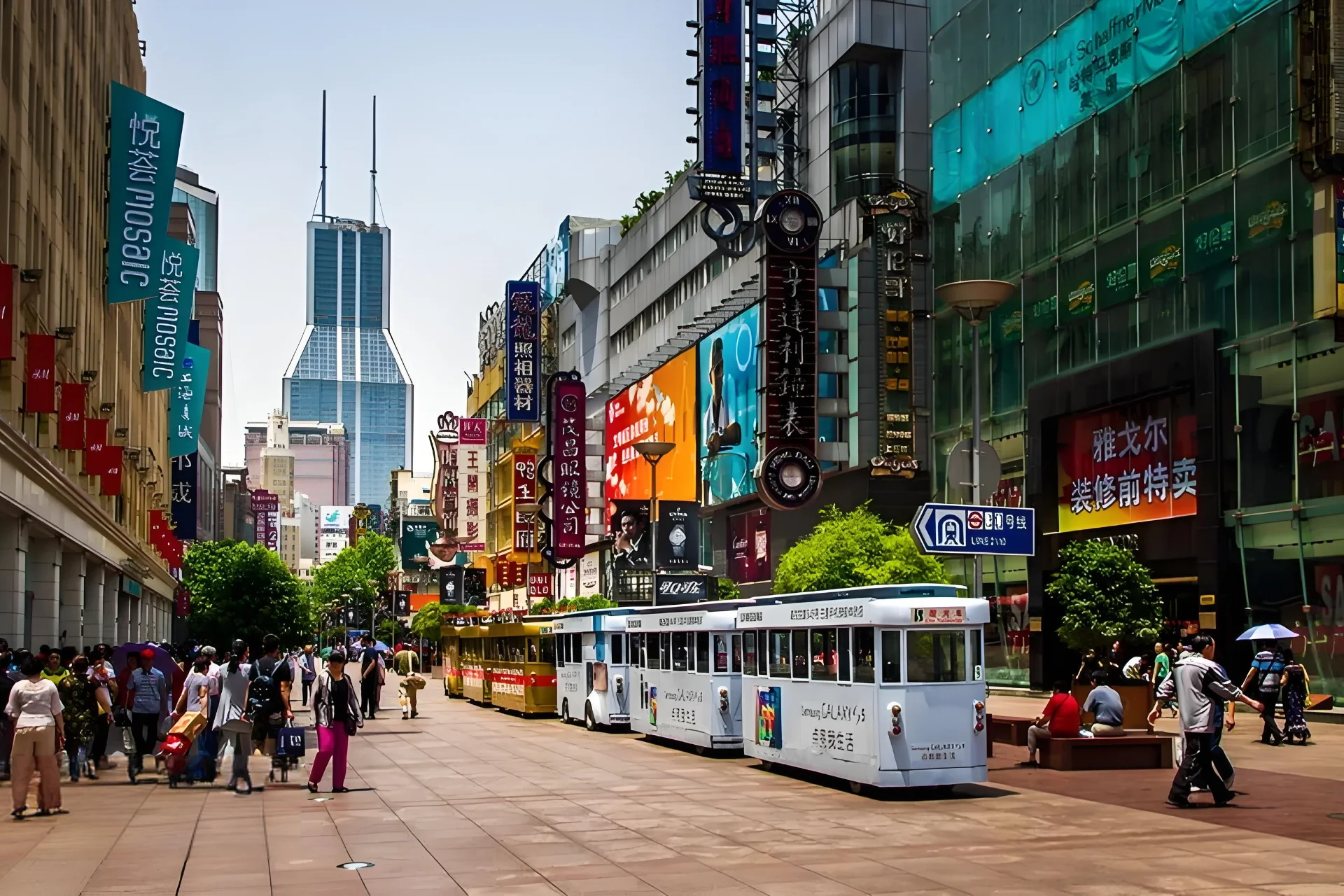
By the 1920s-30s, Shanghai's most prosperous era, Nanjing Road had become the commercial heart of East Asia. The street was lined with grand Art Deco department stores, luxurious hotels, opulent theaters, foreign banks, and fine restaurants. Electric lights, neon signs, trolley cars, and crowds of fashionable shoppers created a cosmopolitan atmosphere that earned Shanghai the nickname "Paris of the East."
The "Big Four" department stores transformed Chinese retail culture:
- Sincere Company (先施公司, October 20, 1917) - Founded by Ma Yingbiao, first modern department store
- Wing On (永安公司, September 5, 1918) - Founded by Guo Le and Guo Quan, pioneered air conditioning and uniformed sales staff
- Sun Sun (新新公司, January 23, 1926) - Founded by Li Minzhou and Liu Xiji, offered rooftop entertainment including restaurants and theaters
- Sun Company (大新公司, January 10, 1936) - Founded by Cai Chang, later No. 1 Department Store, installed Shanghai's first automatic escalators
These stores introduced revolutionary concepts to Chinese commerce:
- Fixed prices (一口价) - Ending the tradition of bargaining for every purchase
- Floor-by-floor organization - Different product categories on different levels
- Escalators - First automatic escalators in Shanghai (Sun Company, 1936, imported from Otis USA)
- Customer service - Uniformed staff trained to assist shoppers politely
- Entertainment - Rooftop gardens, tea rooms, restaurants making shopping a social outing
Communist Era (1949-1980s):
After the 1949 Communist revolution, foreign businesses departed and the department stores were nationalized under state ownership. During the Cultural Revolution (1966-1976), Nanjing Road was briefly renamed "East-West Avenue of the People" (人民东西大道) to remove foreign associations. The street remained important but lost its cosmopolitan flair.
Economic Reform Era (1980s-present):
Following China's economic reforms beginning in 1978, Nanjing Road underwent massive redevelopment. The eastern section was pedestrianized on September 20, 1999, creating the 1.2 km car-free zone. International brands returned, luxury malls opened on West Nanjing Road, and the street reclaimed its status as China's premier shopping destination.
Today, Nanjing Road generates over ¥10 billion ($1.4 billion) in annual retail sales. In 2024, the pedestrian section received 102 million annual visitors (approximately 280,000 daily average), with summer peaks exceeding 400,000 and the street's historical record reaching 3 million visitors on Millennium Eve (December 31, 1999). The street symbolizes both Shanghai's commercial prowess and China's consumer economy growth.
Haipai Culture - Shanghai's Commercial Identity
Nanjing Road embodies "Haipai" (海派) culture—Shanghai's distinctive blend of Chinese and Western influences that distinguishes the city from other Chinese metropolises. The street represents several cultural themes:
1. Commercial Innovation: Shanghai led China's adoption of modern retail practices—the Big Four pioneered fixed pricing, customer service, and entertaining shopping environments that transformed Chinese consumer culture.
2. Cosmopolitan Flair: The mix of Art Deco architecture, neon signs, Western brands, and Chinese department stores reflects Shanghai's historical role as China's most international city—a gateway between East and West.
3. Neon Aesthetic: The proliferation of neon signs, LED billboards, and illuminated facades creates the quintessential Shanghai night scene—a visual aesthetic famously captured in Wong Kar-wai films like "In the Mood for Love."
4. Consumer Culture: Nanjing Road normalized modern consumer culture in China—shopping as leisure activity, brands as status symbols, and retail environments as social spaces.
5. Street Food Integration: The coexistence of luxury stores and street food vendors selling shengjianbao and chou doufu exemplifies Shanghai's ability to blend high and low, traditional and modern, Chinese and Western.
Nearby Attractions & Combining Visits
The Bund - 500m east (5-10 minute walk)
- Colonial waterfront with 52 historic buildings
- Pudong skyline views across Huangpu River
- Free access 24/7
- Combo: Nanjing Road shopping → The Bund sunset/evening (classic Shanghai day)
People's Square - Central point between East/West Nanjing Road
- Shanghai Museum (ancient Chinese art, free admission)
- Urban Planning Exhibition Center (Shanghai's development)
- People's Park (green space for rest)
- Combo: Museums morning → Nanjing Road lunch/shopping afternoon
Yu Garden - 1.5km south (15-20 minute walk)
- Classical Ming Dynasty garden
- Yuyuan Bazaar traditional shopping
- Combo: Yu Garden morning → Nanjing Road lunch → The Bund evening
Jing'an Temple - Western terminus of Nanjing Road
- Buddhist temple (¥50 entrance)
- Jing'an Park green space
- Combo: Jing'an Temple → West Nanjing Road luxury shopping → East Nanjing Road pedestrian mall
Planning Your China Trip
- How much does it cost? — Complete breakdown of daily budgets, attraction fees, and transport costs across China
- Best time to visit — Month-by-month guide to weather, crowds, and holiday periods
- Essential tips for first-timers — Apps to download, payment setup, cultural etiquette, and common mistakes
Final Tips
✅ Do:
- Visit evening (6:00-9:00 PM) for illuminated neon atmosphere
- Walk the full 1.2 km pedestrian section (Bund to People's Square)
- Enter No. 1 Department Store to see historic 1930s interior
- Try Shanghai street food: shengjianbao, chou doufu, tanghulu
- Photograph the neon signs after 7:00 PM when fully illuminated
- Combine with The Bund visit (10-minute walk) for classic Shanghai experience
- Visit on weekdays for 40-50% fewer crowds
- Wear comfortable walking shoes (extensive pavement walking)
- Explore side streets off Nanjing Road for authentic local restaurants
- Compare East (touristy/atmospheric) with West (luxury/sophisticated) sections
❌ Don't:
- Don't visit only during midday—evening atmosphere is the main attraction
- Don't expect great shopping deals—better value elsewhere in Shanghai
- Don't take the tourist "train"—walking provides better experience
- Don't visit on Chinese holidays (National Day, May Day)—extremely crowded
- Don't carry large bags—no storage facilities, tiring to carry while walking
- Don't skip The Bund—it's 10 minutes away and complements Nanjing Road perfectly
- Don't expect authentic old Shanghai—it's commercialized and touristy (but still iconic)
- Don't forget to look up—many neon signs and architectural details are above eye level
- Don't over-shop on Nanjing Road—save money for dining and experiences elsewhere
Bottom line: Nanjing Road is touristy, commercialized, and not the best shopping value—but it remains an essential Shanghai experience. Visit for the atmosphere rather than serious shopping: the evening neon spectacle, historic department stores, sheer commercial energy, and people-watching create a quintessentially Shanghai scene. The contrast between 1930s Art Deco architecture and modern LED billboards, between street food vendors and luxury boutiques, captures Shanghai's unique blend of tradition and modernity, Chinese and Western influences. Combined with The Bund (10-minute walk), Nanjing Road anchors a perfect classic Shanghai day. Go with realistic expectations (crowds, commercialization, tourist focus), visit in evening for best atmosphere, and enjoy the sensory overload that is China's most famous shopping street.
References
-
Shanghai Municipal Archives (上海档案信息网). "Nanjing Road: History of Shanghai's Premier Commercial Street (南京路:上海第一商业街的历史)." 2024. Comprehensive documentation of Nanjing Road's development from 1851 Park Lane through present day.
-
Huangpu District People's Government (黄浦区人民政府官网). "Nanjing Road Pedestrian Street Management and Development." Official government records, 2024-2025. Authority for visitor statistics, pedestrianization date (September 20, 1999), and current management policies.
-
Wikipedia contributors. "Nanjing Road (南京路)." Chinese Wikipedia, The Free Encyclopedia. Accessed January 2026. Detailed historical timeline, architectural specifications, and Big Four department stores founding dates.
-
Wikipedia contributors. "Nanjing Road." English Wikipedia, The Free Encyclopedia. Accessed January 2026. International perspective on Shanghai's most famous shopping street.
-
Interface News (界面新闻). "Nanjing Road Pedestrian Street: 102 Million Annual Visitors in 2024 (南京路步行街2024年接待游客1.02亿人次)." December 2024. Official visitor statistics and peak period data.
-
Liberation Daily (解放日报). "Nanjing Road Historical Development and Cultural Significance." 2024. Shanghai's authoritative newspaper coverage of commercial district evolution.
-
National Culture Memory Bank (国家文化记忆库). "Shanghai Big Four Department Stores: Architectural and Cultural Heritage (上海四大百货公司建筑文化遗产)." Authoritative documentation of Sincere, Wing On, Sun Sun, and Sun Company with exact founding dates, founders, and architectural specifications.
-
Yeh, Wen-hsin. "Shanghai Splendor: Economic Sentiments and the Making of Modern China, 1843-1949." University of California Press, 2007. Academic analysis of Shanghai's golden age commercial development and Haipai culture.
-
Shanghai Urban Planning Bureau. "Nanjing Road Pedestrian Street Development Report (南京路步行街发展报告)." 2025. Technical specifications, length measurements (5.5km total, 1.2km pedestrian section), and urban planning data.
-
Plaza 66 (恒隆广场) Official Website. "Store Directory and Operating Hours." 2025. Verified luxury brand listings and daily operating hours (10:00-22:00).
-
Jing'an Temple (静安寺) Official Management. "Visitor Information and Admission Policies (游客信息与门票政策)." 2026. Current admission prices (¥50 regular, free on lunar 1st/15th), operating hours (7:30-17:00), and temple regulations.
-
Field research and verification by GoPagoda Travel research team, conducted December 2025-January 2026. Including on-site visits, metro station exit verification, peak hour observation (weekends 9:00-11:00 AM, 4:00-6:00 PM), and department store architectural documentation.