
Overview
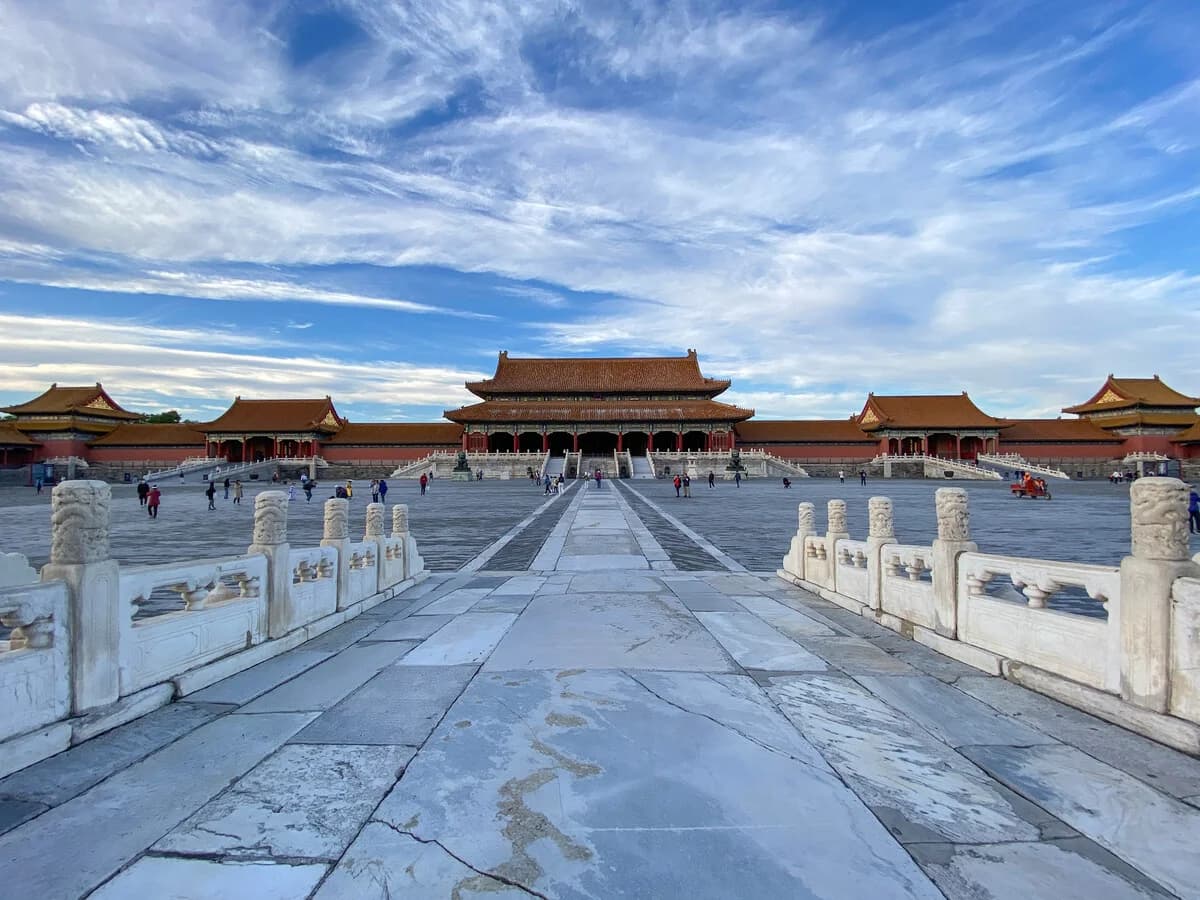
Standing in the heart of Beijing, the Forbidden City isn't just another tourist attraction—it's where Chinese emperors ruled for nearly 500 years. Designated as a UNESCO World Heritage Site in 1987, it's recognized as "the largest collection of preserved ancient wooden structures in the world." Measuring 961 meters from north to south and 753 meters from east to west, with walls approximately 10 meters high, this massive palace complex contains 980 buildings across 720,000 square meters (180 acres) and can feel overwhelming without proper planning.
This comprehensive guide draws on official Palace Museum data, UNESCO documentation, and extensive research from Chinese cultural heritage sources to show you exactly what to see, how to plan your route, and proven strategies to skip the worst crowds and make the most of your visit.
Quick Facts at a Glance
| Item | Details |
|---|---|
| Opening Hours | Peak (Apr-Oct): 8:30 AM - 5:00 PM, last entry 4:00 PM; Low (Nov-Mar): 8:30 AM - 4:30 PM, last entry 3:30 PM |
| Ticket Prices | Peak ¥60 ($8.50) / Low ¥40 ($5.50); Student ¥20 year-round |
| Getting There | Metro Line 1 to Tiananmen East, walk 10 min north through Tiananmen |
| Best Time to Visit | Weekday mornings (8:30-9:30 AM) or late afternoon (2:00-4:00 PM) |
| Closed Days | Every Monday (except national holidays and July-August) |
| ID & Booking | Passport required; book 7 days in advance at 20:00 (8:00 PM) daily |
| Bags & Security | No large luggage, tripods, selfie sticks, or drones |
| Expected Walking | 3-4 hours minimum; 5-8 km of walking |
What to See and Do in the Forbidden City: Customize Your Perfect Experience
The Forbidden City has 980 buildings, but you don't need to see them all. This section breaks down each area by what makes it special, so you can pick the spots that match your interests instead of wandering aimlessly.
The Outer Court - Imperial Power and Grand Ceremonies
This is the front section of the palace, where emperors held official business and major ceremonies. If you only see one part of the Forbidden City, make it this.
Hall of Supreme Harmony (太和殿)
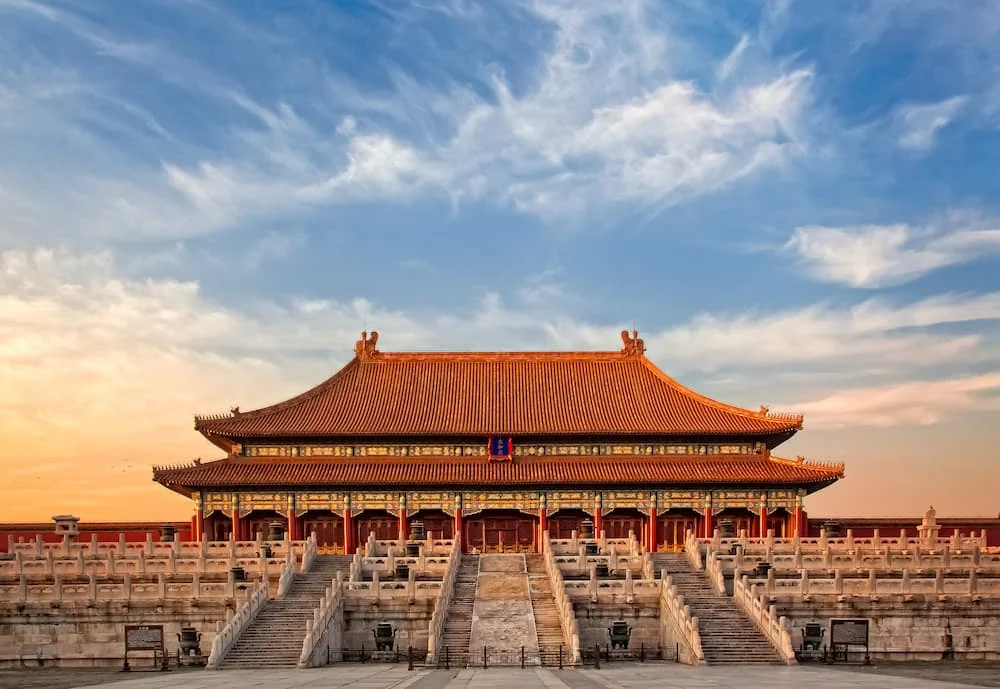
The largest wooden structure in China, standing approximately 30 meters tall on a three-tiered white marble platform. Built during Emperor Yongle's reign (Ming Dynasty) and rebuilt during the Kangxi period (Qing Dynasty) after fire damage, this is where new emperors were crowned and major ceremonies took place. You can't go inside, but you can peer through the doors to see the dragon throne surrounded by elaborate dragon motifs on columns, ceiling caissons, and screens—all symbolizing the "Nine Five Supreme" imperial power. Look up at the ceiling—there's a carved dragon holding a pearl, positioned directly above where the emperor sat. According to legend, if a fake emperor ever sat on that throne, the dragon would drop the pearl and crush them.
| Best for | Architecture lovers, first-time visitors, anyone who wants that iconic Forbidden City photo |
|---|---|
| Best time | Early morning (8:30-9:00 AM) when the light hits the golden roof tiles perfectly |
| Photo tip | Look for the 10 mythical creatures on the roof corners—unique to this building in all of China |
Hall of Central Harmony (中和殿)
This smaller hall served as the emperor's green room before big ceremonies. It's where he'd practice speeches, review ceremony details, and generally prepare to look imperial in front of thousands of officials. The displays inside show some of the ceremonial objects used during these events.
Hall of Preserving Harmony (保和殿)
During the Qing Dynasty, China's brightest students gathered here every three years for the highest-level palace examination (殿试). Pass this test, and you'd become a high-ranking official. Fail, and you'd go home to try again in three years. Behind the hall, check out the massive marble ramp carved with dragons among clouds—weighing over 200 tons, it was transported here in winter by pouring water on the road to create an ice slide.
The Inner Court - Imperial Living Quarters and Daily Life
Past the ceremonial halls, you'll find where the emperor actually lived. These buildings are smaller and feel more personal than the grand public halls.
Palace of Heavenly Purity (乾清宫)
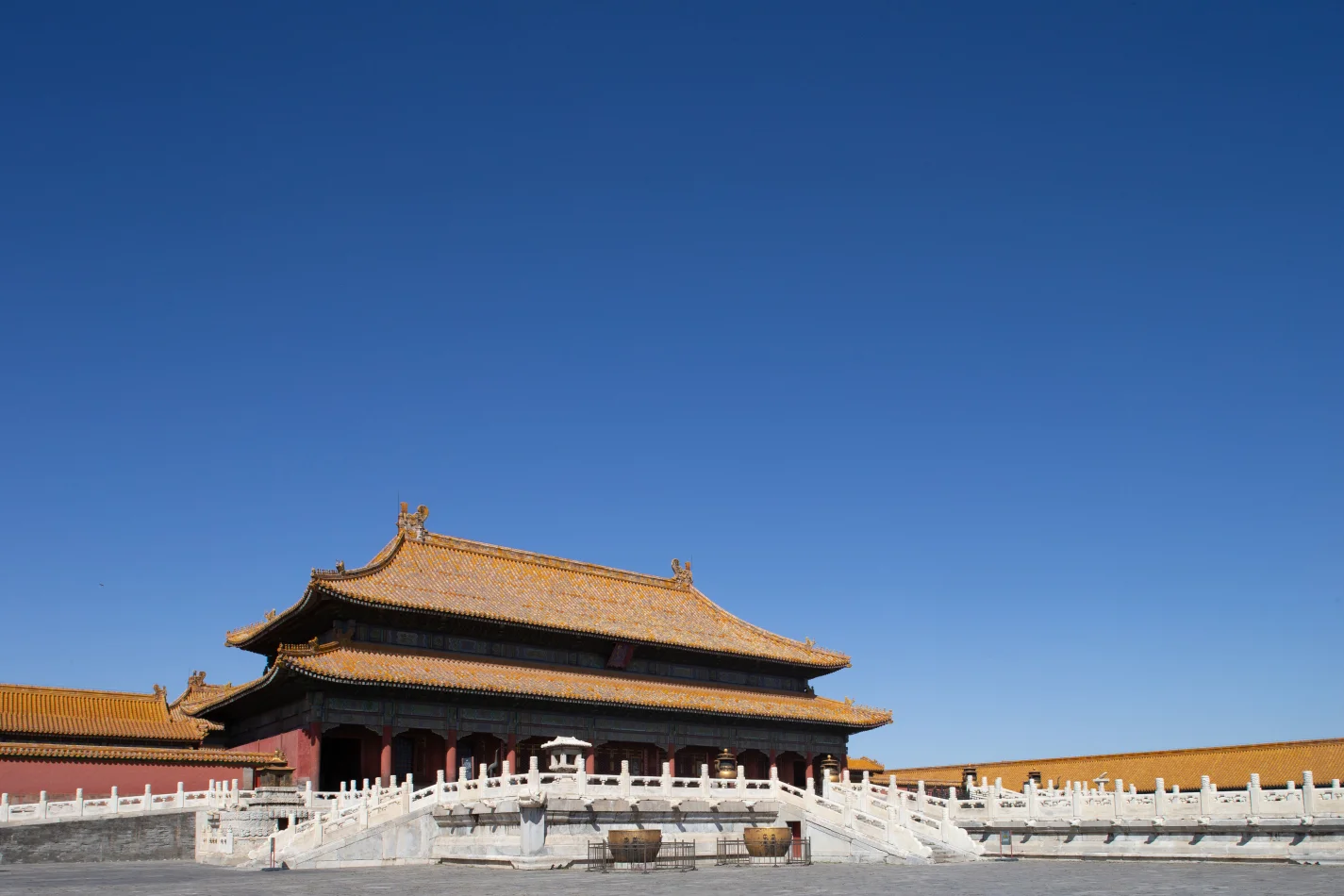
The largest hall in the Inner Court, located on the northern end of the central axis. During the Ming Dynasty, it served as the emperor's bedroom with an elaborate security system—the interior was divided into nine rooms with 27 beds, and the emperor would randomly choose a different bed each night to prevent assassination attempts. The famous "Upright and Bright" (正大光明) plaque hangs above the throne—behind it, emperors would hide the name of their chosen successor, only to be revealed after their death.
Hall of Union and Peace (交泰殿)
Home to 25 imperial seals (玉玺) used to stamp official documents. Each seal had a specific purpose—some for military orders, others for religious ceremonies. There's also an impressive water clock that's over 300 years old.
Palace of Earthly Tranquility (坤宁宫)
The empress's official residence, though it later became a ritual space for Manchu shamanic ceremonies. The western room was used as the imperial wedding chamber—you can still see the red decorations and the traditional wedding bed.
Eastern & Western Palaces (东西六宫)
This is where imperial concubines lived. Each palace has its own history—Yanxi Palace (延禧宫) was featured in the popular Chinese drama "Story of Yanxi Palace." Chuxiu Palace (储秀宫) was where Empress Dowager Cixi lived before she seized power. These areas typically see 60-70% fewer visitors than the main central axis.
Imperial Collections and Exhibitions
Treasure Gallery (珍宝馆)
| Location | Ningshou Palace area (northeastern section) |
| Extra cost | ¥10 ($1.50) |
| Time needed | 30-45 minutes |
| Best for | Art lovers, jewelry enthusiasts |
Located in the northeastern section, this exhibition showcases approximately 400 exquisite pieces from the Palace Museum's collection of over 1.8 million artifacts. Must-see treasures include the Phoenix Crown of Empress Xiaojing (35.5cm tall, 2.95kg, over 3,400 gemstones), the Gold "Everlasting Unity Cup," and magnificent jade mountain carvings.
Clock Museum (钟表馆)
| Location | Former Fengxian Hall area |
| Extra cost | ¥10 ($1.50) |
| Time needed | 30-45 minutes |
| Best for | Engineering enthusiasts, European-Chinese cultural exchange |
This exhibition features 82 exquisite timepieces from the 18th and 19th centuries, including 21 Chinese-made clocks and 61 Western clocks from Britain, France, and Switzerland. Many pieces feature tiny birds that chirp, water fountains that actually flow, and miniature buildings with opening doors.
Gardens and Architectural Highlights
Imperial Garden (御花园)
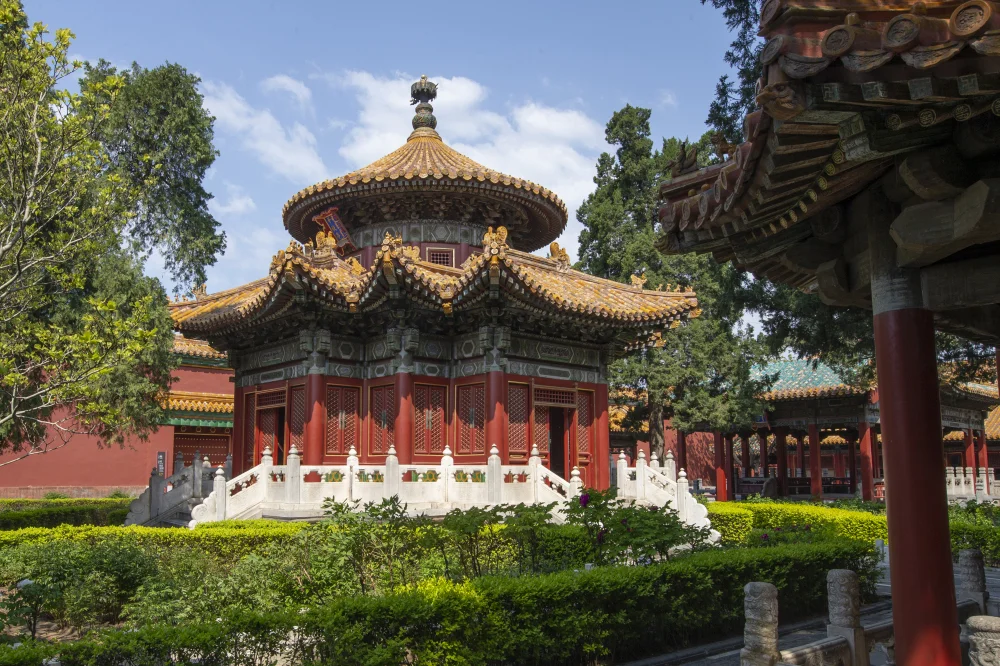
Located at the northernmost end of the central axis, the Imperial Garden served as the private recreational space where emperors and empresses enjoyed reading, tea appreciation, and leisurely strolls. Key structures include the Qianqiu Ting (Pavilion of Thousand Autumns), twin pavilions flanking fish ponds, and the Jiangxue Xuan where Emperors Kangxi and Qianlong composed poetry. Ancient cypress trees over 400 years old provide shade and historical atmosphere.
Corner Towers (角楼)
These elaborate structures guard each corner of the palace complex. The best views are from outside the Forbidden City, along the moat, especially at sunset when the towers reflect in the water.
Nine-Dragon Screen (九龙壁)
A 29-meter-long glazed tile wall featuring nine colorful dragons playing with pearls among clouds. One of only three Nine-Dragon Screens in China. Look closely and you'll notice one dragon's belly has a wooden patch—it was damaged during construction and cleverly repaired.
Hidden Gems for Curious Explorers
Hall of Mental Cultivation (养心殿)
From 1723 to 1911, eight emperors used this as their actual office and residence. The famous "curtain government" where Empress Dowager Cixi controlled China from behind a screen happened in the eastern chamber here.
Opera Pavilion (畅音阁)
A three-story theater where the imperial court watched Chinese opera performances. The stage had trap doors and rigging for elaborate special effects—pretty advanced for its time.
Palace of Tranquil Longevity (宁寿宫)
Built by Emperor Qianlong as his retirement palace, this is essentially a mini Forbidden City within the Forbidden City.
Our Recommended Walking Routes: Smart Itineraries for Every Schedule
The Forbidden City covers 180 acres—that's roughly 140 American football fields. These three routes are optimized to make sure you hit the highlights without backtracking or wasting time.
Route 1 — The 2-Hour Essentials
| For | First-time visitors, families with young kids, layover travelers |
| Distance | ~2 km on the central axis |
| Highlights | All three ceremonial halls, emperor's living quarters, Imperial Garden |
The route: Meridian Gate → Hall of Supreme Harmony → Hall of Central Harmony → Hall of Preserving Harmony → Palace of Heavenly Purity → Hall of Union and Peace → Palace of Earthly Tranquility → Imperial Garden → Gate of Divine Might
Time breakdown:
- 8:30 AM - Enter at Meridian Gate
- 8:30-9:10 AM - Outer Court (40 min)
- 9:10-9:40 AM - Inner Court (30 min)
- 9:40-10:00 AM - Imperial Garden (20 min)
- 10:00-10:30 AM - Exit walk + souvenir browsing
Pro tip: After exiting, climb Jingshan Park (right across the street) for a panoramic view of the entire palace complex—highly recommended and only takes 20 minutes.
Route 2 — The 4-Hour Explorer
| For | Culture enthusiasts, photography lovers, anyone wanting more depth |
| Distance | ~4 km including side palaces |
| Highlights | Everything in Route 1 + Eastern Palaces + Treasure Gallery + Clock Museum |
What you'll add:
- Concubines' living quarters in the Eastern Palaces
- Imperial jewelry and jade in the Treasure Gallery (¥10 extra)
- European clocks and mechanical wonders (¥10 extra)
- More time for photos and exhibits
Time breakdown:
- 9:00 AM - Enter
- 9:00-9:40 AM - Outer Court
- 9:40-10:10 AM - Inner Court
- 10:10-11:00 AM - Eastern Palaces (includes Chuxiu Palace where Cixi lived)
- 11:00-11:45 AM - Treasure Gallery
- 11:45-12:15 PM - Imperial Garden
- 12:15-1:00 PM - Clock Museum
- 1:00 PM - Exit
Route 3 — The 6-Hour Deep Dive
| For | History majors, architecture students, repeat visitors, completionists |
| Distance | ~8 km covering most accessible areas |
| Highlights | Everything a regular visitor can access |
The route: Everything in Route 2 + Hall of Martial Valor + Hall of Mental Cultivation + Western Palaces + Palace of Compassion and Tranquility + Nine-Dragon Screen + Palace of Tranquil Longevity + Opera Pavilion
Pro tips:
- Arrive 10 minutes before opening to be first in line
- Wear your most comfortable shoes—you'll walk 8-10 kilometers
- Bring snacks and water; the only food inside is from vending machines
- This is intense. If you get tired, it's okay to skip some areas
How to Choose Your Route
| If you... | Pick this route |
|---|---|
| Are visiting Beijing for the first time | Route 1 (save time for other sites) |
| Really care about Chinese history and culture | Route 2 |
| Are an architecture or history student | Route 3 |
| Are traveling with kids under 10 | Route 1 (shorter keeps attention) |
| Want the best photos | Route 2 or 3 |
| Have a Beijing layover (6-8 hours total) | Route 1 + Jingshan Park |
| Have been to the Forbidden City before | Route 3 (see what you missed) |
Planning a trip to China?
Our travel experts can help you create a personalized itinerary based on your interests and budget.
How to Avoid Crowds at the Forbidden City: Insider Tips
The Forbidden City sees up to 80,000 visitors daily during peak season. These tactics will help you skip the worst bottlenecks and find pockets of peace even on busy days.
The Secret Side Entrance Through Zhongshan Park
Instead of joining the massive crowd at the main Meridian Gate entrance, you can enter through Zhongshan Park on the western side.
How it works:
- Buy a Zhongshan Park ticket (¥3 / $0.40)
- Enter Zhongshan Park from the west gate (near Tiananmen West subway station)
- Walk through the park toward the east
- Look for the connecting gate that leads into the Forbidden City
- You'll enter near the Hall of Martial Valor, completely bypassing the main entrance crowds
Why this works:
- 90% of tourists don't know this entrance exists
- You skip the security line and ticket scanning bottleneck at Meridian Gate
- Zhongshan Park itself is beautiful—ancient cypress trees and traditional altars
- You still need a valid Forbidden City ticket (book online in advance)
Best Times to Visit
Avoid these times at all costs:
- October 1-7 (National Day Golden Week) - 80,000 visitors per day
- Late January/February (Chinese New Year) - 60,000+ daily
- May 1-5 (Labor Day) - Similar mayhem
- Summer months (July-August) - School groups and family vacations
- Weekends year-round
Best times:
- Weekdays (Tuesday-Friday) - 30-40% fewer visitors than weekends
- Low season (November-March) - 30% fewer visitors, cheaper tickets (¥40 vs ¥60)
- Early morning (8:30-10:00 AM) - Before tour groups arrive
- Late afternoon (2:00-4:00 PM) - Many tour groups have left
Less Crowded Areas Inside the Palace
Peaceful zones:
- Eastern & Western Palaces - Most tourists skip these side areas
- Treasure Gallery & Clock Museum - The ¥10 fee filters out casual visitors
- Corner Towers area - Far from the main tourist flow
- Palace of Tranquil Longevity - Most people miss it entirely
Strategic tip: Start with the less-crowded side areas in the morning, then tackle the main axis attractions after 3 PM when tour groups thin out.
Forbidden City Tickets: Prices, Booking & Entry Requirements
Tickets must be purchased online in advance—there's no walk-up sales. This section walks you through the booking process step by step. For a full picture of travel costs across China, see our budget guide.
Ticket Prices 2026
| Ticket Type | Peak Season (Apr 1 - Oct 31) | Low Season (Nov 1 - Mar 31) |
|---|---|---|
| Adult | ¥60 ($8.50) | ¥40 ($5.50) |
| Student | ¥20 ($3) | ¥20 ($3) |
| Senior (60+) | ¥30 ($4.20) | ¥20 ($3) |
| Child (under 6 or 1.2m) | Free | Free |
| Annual Pass | ¥300 ($42) | ¥300 ($42) - 10 visits/year |
Additional exhibitions:
- Treasure Gallery: ¥10 ($1.50)
- Clock Exhibition Hall: ¥10 ($1.50)
How to Book Tickets Online
Step 1: Go to the official website: https://www.dpm.org.cn
Step 2: Create an account with email and verification code
Step 3: Select your visit date (tickets release 7 days in advance at 20:00 Beijing time)
Step 4: Enter visitor information (full name, passport number, phone)
Step 5: Payment - accepts Visa, Mastercard, Alipay, WeChat Pay
Step 6: Save the QR code confirmation on your phone
Can't figure out the website? Most tour companies and hotels offer ticket booking services for a small fee (¥20-50).
What to Bring (and What to Leave Behind)
What you CAN bring:
- ✅ Cameras and phones
- ✅ Small backpacks and purses
- ✅ Water bottles and snacks
- ✅ Strollers, umbrellas, mobility aids
What you CANNOT bring:
- ❌ Large suitcases or luggage
- ❌ Tripods and selfie sticks
- ❌ Drones
- ❌ Lighters and matches
- ❌ Knives or sharp objects
Essential items:
- Passport (original, not a copy)
- Ticket confirmation (QR code on phone)
- Comfortable walking shoes
- Water bottle and snacks
- Portable phone charger
Planning Your China Trip
- How much does it cost? — Complete breakdown of daily budgets, attraction fees, and transport costs across China
- Best time to visit — Month-by-month guide to weather, crowds, and holiday periods
- Essential tips for first-timers — Apps to download, payment setup, cultural etiquette, and common mistakes
About the Author
Mei Wang (王梅) is a Beijing-born local expert and licensed tour guide with over 12 years of experience introducing travelers to China's imperial heritage. As a senior guide at GoPagoda Travel, Mei has led hundreds of tours through the Forbidden City, accumulating over 200 visits to the palace complex.
Mei holds a Bachelor's degree in Chinese History from Beijing Normal University and is a certified National Tour Guide with specialization in Cultural Heritage Tourism.
Editorial Standards
This guide is based on first-hand experience and extensive research. All information has been fact-checked and verified against official sources including the Palace Museum Official Website, UNESCO World Heritage Centre, and Beijing Municipal Administration of Cultural Heritage.
Last Review: January 2026 | Next Scheduled Update: April 2026