
Overview
The Temple of Heaven (天坛 Tiāntán) is where Chinese emperors performed sacred rituals for nearly 500 years, praying for good harvests and communicating with Heaven. Built in 1420 (明永乐十八年, Ming Yongle 18th year) during Emperor Yongle's reign, it was originally named "Temple of Heaven and Earth" (天地坛) before being renamed "Temple of Heaven" in 1530 (明嘉靖九年). Designated as a UNESCO World Heritage Site in 1998, it's recognized as "a masterpiece of architecture and landscape design that simply and graphically illustrates a cosmogony of great importance for the evolution of one of the world's great civilizations."
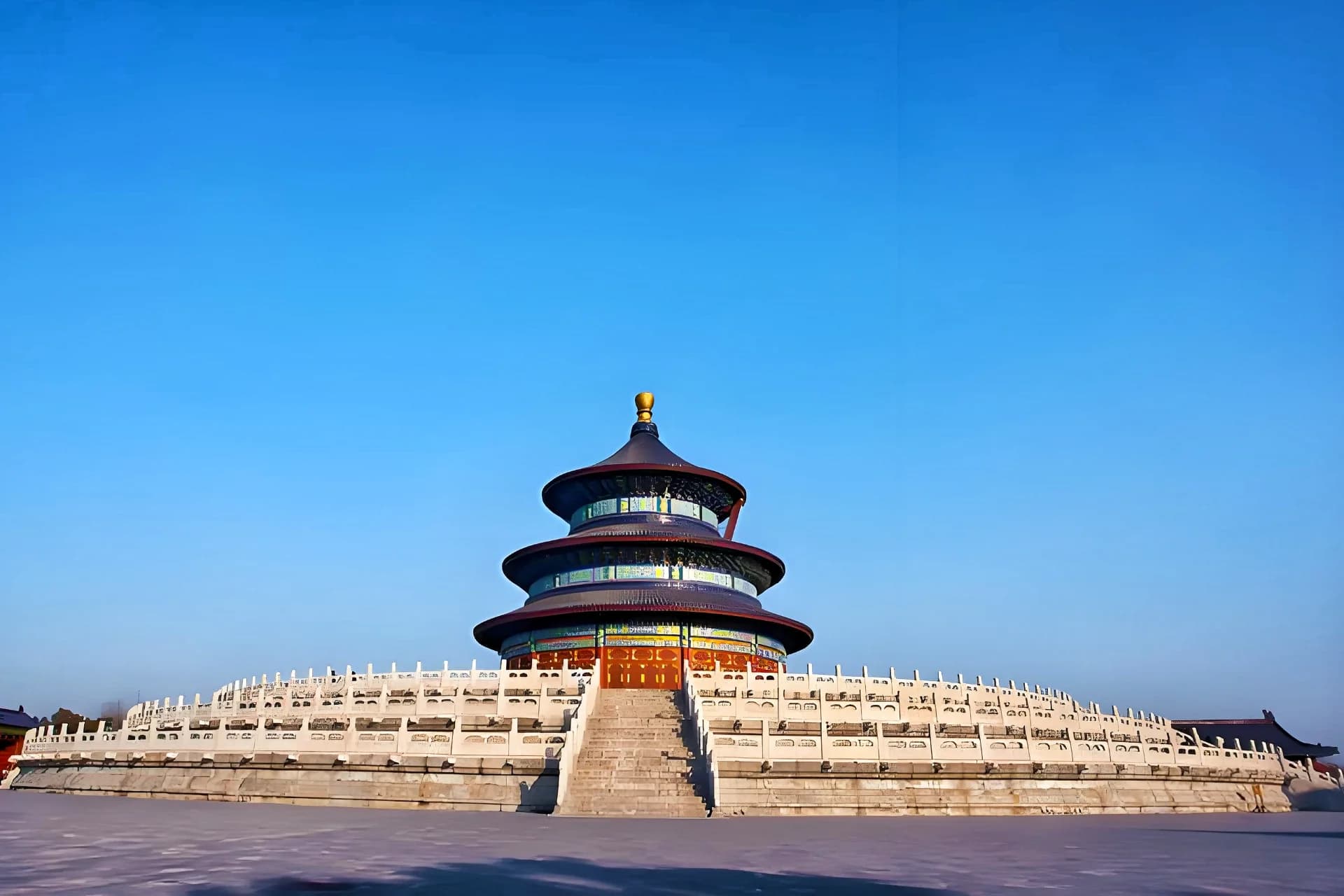
Covering approximately 2.73 million square meters (273 hectares)—four times the size of the Forbidden City—this massive imperial complex combines stunning Ming Dynasty architecture with profound Chinese cosmology embodying the "round heaven, square earth" (天圆地方) philosophical principle. The iconic Hall of Prayer for Good Harvests (祈年殿) with its triple-tiered blue glazed-tile roof is one of Beijing's most recognizable landmarks.
The temple served as the sacred venue where Ming and Qing emperors conducted winter solstice heaven worship ceremonies and spring prayers for abundant harvests. In 1918, it opened to the public as a park. In 1961, it was designated China's first batch of National Key Cultural Relic Protection Units (全国重点文物保护单位). Most recently, on July 27, 2024, it was inscribed as part of the "Beijing Central Axis—A Masterpiece of Ideal Order of the Chinese Capital" UNESCO World Heritage ensemble, further cementing its global cultural significance.
This comprehensive guide draws on official Temple of Heaven Park documentation, UNESCO reports, and extensive research to help you plan the perfect visit—from understanding the symbolic architecture to finding the best morning tai chi spots.
Quick Facts at a Glance
Opening Hours
- Peak Season (April 1 - October 31): Park 6:00 AM - 10:00 PM, Buildings 8:00 AM - 5:30 PM
- Off-Season (November 1 - March 31): Park 6:30 AM - 10:00 PM, Buildings 8:00 AM - 5:00 PM
- Open daily year-round
- Important: Hall of Prayer (祈年殿), Echo Wall (回音壁), Circular Mound Altar (圜丘), Abstinence Palace (斋宫), Northern Divine Kitchen (北神厨), and Northern Slaughtering Pavilion (北宰牲亭) close every Monday (remain open on national holidays)
Ticket Prices (2026)
- Through Ticket (联票) Peak Season: ¥34 adults, ¥17 discount
- Through Ticket Off-Season: ¥28 adults, ¥14 discount
- Park Entry Only Peak: ¥15 adults, ¥7.5 discount
- Park Entry Only Off-Season: ¥10 adults, ¥5 discount
- Individual Building Ticket: ¥20 adults, ¥10 discount (if purchased separately)
- Discount tickets apply to students, seniors 60+, and other eligible groups with valid ID
- Through ticket includes: Park entry + Hall of Prayer + Echo Wall + Circular Mound Altar + Imperial Vault
Best Time to Visit
- Early morning (6:00-8:00 AM) for local cultural activities
- Weekdays are less crowded than weekends
- Spring (April-May) and Autumn (September-October) offer best weather
Getting There
- Metro Line 5: Tiantan Dongmen Station (天坛东门站), Exit A or A1 - East Gate (most convenient, recommended)
- Metro Line 8: Tianqiao Station (天桥站), Exit C - West Gate
- 5-minute walk from Line 5 station to East Gate entrance
- Multiple bus routes to all four gates (East, South, West, North)
- East Gate parking: 160 spaces available; recommend using shared bikes from nearby metro or parking at National Centre for the Performing Arts/Financial Street Shopping Center (park 2km+ restrictions)
Expected Walking
- 2-3 hours minimum visit
- 5,000-8,000 steps (3-5 km of walking)
- Massive park—wear comfortable shoes
What to See and Do at the Temple of Heaven
The Temple of Heaven has two main sections connected by a sacred walkway. This guide breaks down each area by significance so you can prioritize based on your interests and time.
The Northern Section - Hall of Prayer for Good Harvests
Hall of Prayer for Good Harvests (祈年殿 Qíniándiàn)
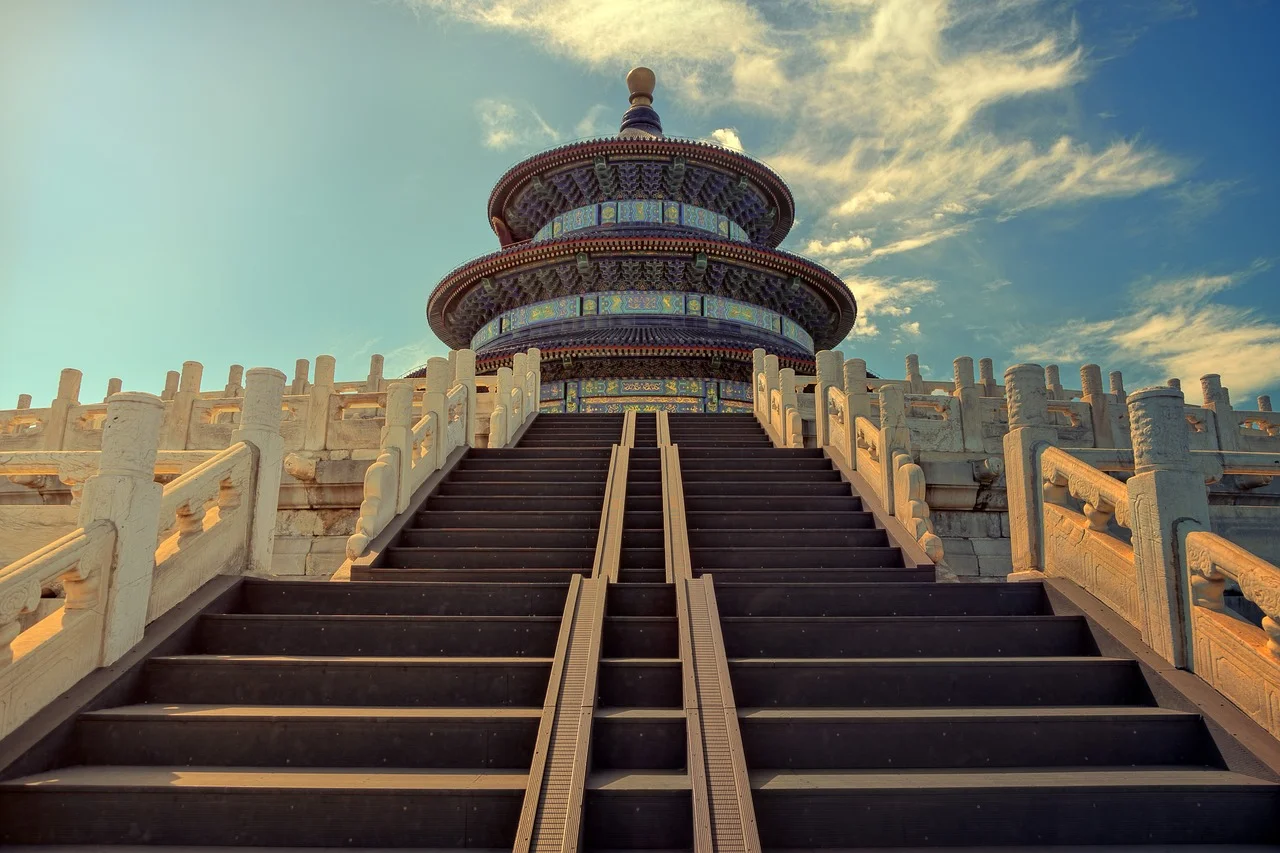
This is the iconic circular building you see on every Beijing postcard—a magnificent triple-tiered structure with resplendent blue glazed tiles (蓝色琉璃瓦) representing Heaven. Originally built in 1420 (明永乐十八年) during Emperor Yongle's reign, the current structure dates from 1896 (光绪二十二年) after the original was destroyed by lightning fire in 1889 and meticulously reconstructed.
Architectural Specifications:
- Diameter: 32 meters
- Height: 38 meters (from ground to roof apex)
- Floor Area: 460 square meters
- Base Platform: Three-tiered white marble circular platform, 6 meters tall with white jade balustrades
- Roof: Triple-tiered blue glazed tiles with gilt-bronze finial, embodying "round heaven" philosophy
Structural Marvel - The 28 Pillars:
Built entirely of precious nanmu wood (楠木) without a single nail, using intricate interlocking bracket sets (斗栱 dǒugǒng), the hall showcases extraordinary Ming Dynasty timber engineering:
- 4 Central Dragon Well Pillars (龙井柱): 19.2m tall, 1.2m diameter, representing the four seasons, supporting the upper roof tier
- 12 Middle Gold Pillars (金柱): Representing 12 months, supporting the middle roof tier
- 12 Outer Eave Pillars (檐柱): Representing 12 traditional two-hour time divisions (时辰 shíchen), supporting the lowest roof tier
Symbolic Numerology: The 28 pillars collectively symbolize the four seasons, twelve months, twelve time divisions (时辰), twenty-four solar terms (二十四节气), and the twenty-eight lunar mansions (二十八宿)—embodying the complete cosmological calendar system that governed imperial agricultural rituals.
Design Philosophy: The building references Wu Zetian's Mingtang (明堂) palace in Luoyang, adopting the principle of "round roof to model heaven, square platform to model earth" (上圆以法天、台基方以法地), integrating Taoist cosmology with Confucian ritual architecture.
Why it matters: Emperors conducted the Spring Prayer for Good Harvests Ceremony (祈谷礼) here every first xīn day of the lunar new year, supplicating Heaven for abundant crops to sustain the empire. The building's perfect proportions, sacred numerology, and integration of architecture with cosmology represent the pinnacle of Chinese imperial ritual architecture.
Photography tip: Best photographed from the south approach through the ancient pine forest in early morning golden hour (7:30-9:00 AM). For dramatic framing, shoot from beneath the Northern Heavenly Gate (北天门) arch looking upward to emphasize the hall's towering majesty. Friday and Saturday evenings feature illumination (check seasonal schedules).
Time needed: 45-60 minutes (including exterior walk around platform, interior viewing, and photography)
The Southern Section - Circular Mound Altar & Imperial Vault
Circular Mound Altar (圜丘坛 Huánqiūtán)
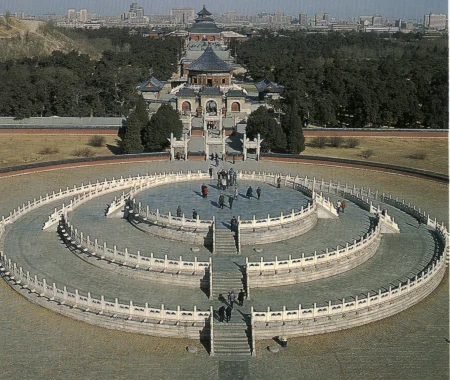
A stunning three-tiered white marble platform where emperors performed the most sacred Heaven Worship Ceremony (祭天大典) during the winter solstice. Originally built in 1530 (明嘉靖九年) and significantly expanded in 1750 (清乾隆十五年), this altar represents the cosmological center of the Chinese universe—the point where earth meets heaven.
Architectural Dimensions (After 1750 Qing Expansion):
- Upper Tier: Diameter 23.65m, Height 1.87m
- Middle Tier: Diameter 39.31m, Height 1.63m
- Lower Tier: Diameter 54.91m, Height 1.67m
- Total Height: 5.71 meters from ground to upper platform
Sacred Numerology - The Power of Nine:
The number nine (九 jiǔ), representing the highest yang principle and imperial supremacy, governs every dimension:
- Balustrade Panels: Upper tier 72 (9×8), middle tier 108 (9×12), lower tier 180 (9×20), totaling 360 panels symbolizing 360 degrees and the "supreme of nines" (九五之尊)
- Platform Stones: All paving stone quantities use multiples of nine
- Symbolic Meaning: Nine represents the "Nine Heavens" (九重天)—the celestial realm where the Supreme Emperor of Heaven (皇天上帝) resides
The Heaven's Heart Stone (天心石 Tiānxīnshí):
Stand on the central circular stone (less than 1 meter diameter) at the very top of the upper tier and speak or clap—you'll hear a remarkable echo amplification. This acoustic phenomenon results from sound waves reflecting off the circular marble surface, and was interpreted as Heaven responding to the emperor's prayers.
Why it matters: This was the most sacred ritual site in all of imperial China—where the emperor, as the "Son of Heaven" (天子), conducted the winter solstice sacrifice to report the year's governance to the Supreme Emperor of Heaven and petition for continued divine mandate. No location held greater cosmic significance in Chinese imperial cosmology.
Time needed: 30 minutes (including Heaven's Heart Stone experience and platform exploration)
Imperial Vault of Heaven (皇穹宇 Huángqióngyǔ)
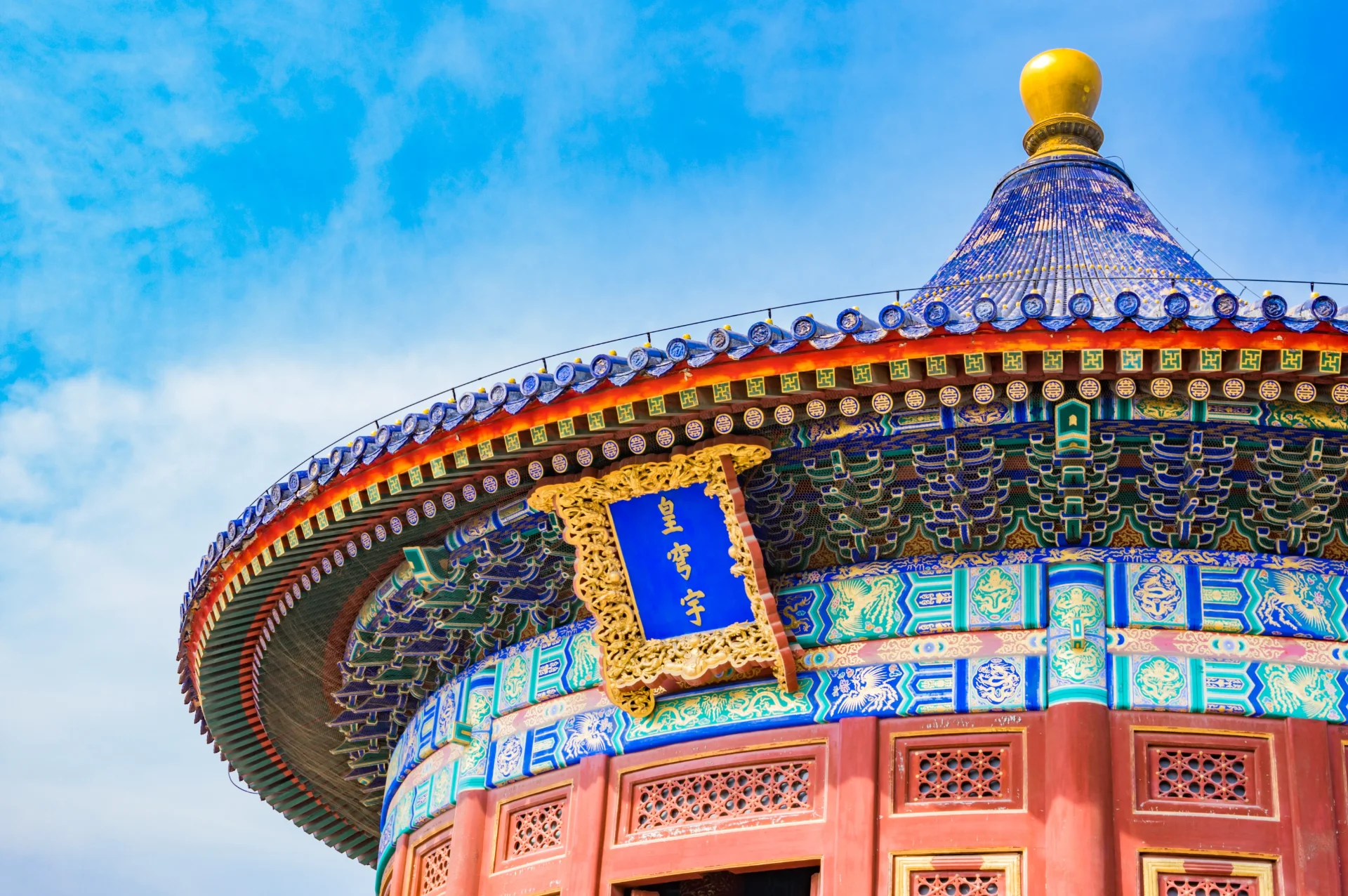
A smaller circular hall with a blue-tiled conical roof, built in 1530 (明嘉靖九年) and reconstructed in 1752 (清乾隆十七年), serving as the sacred repository for deity tablets used during the Circular Mound Altar sacrifices.
Architectural Specifications:
- Diameter: 15.6 meters
- Height: 19.02 meters (total height to roof apex)
- Base Platform: 9 chi (Chinese feet, approximately 2.88m) tall, diameter 5 zhang 9 chi 9 cun (approximately 15.67m)
Echo Wall (回音壁 Huíyīnbì) - Acoustic Marvel:
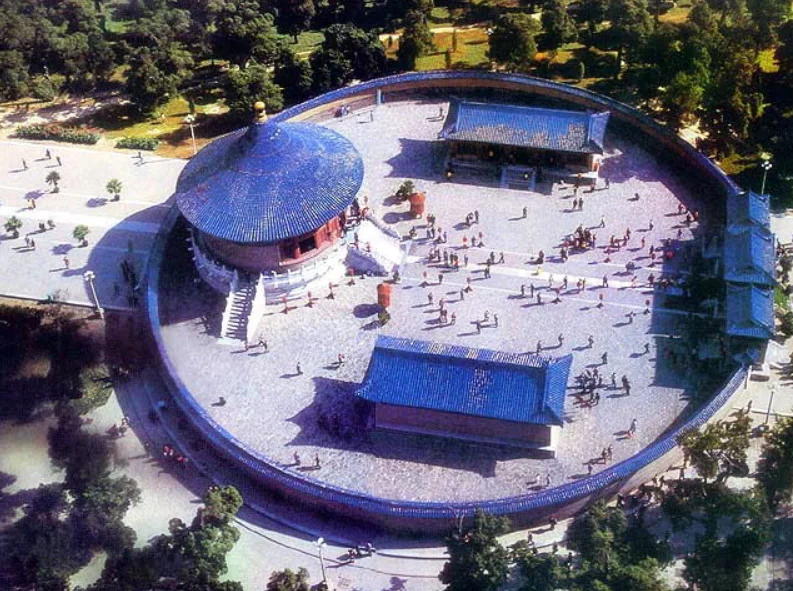
The Imperial Vault is encircled by the famous Echo Wall—a 3.72-meter-tall, 0.9-meter-thick smooth circular wall constructed using precision-fitted bricks (磨砖对缝工艺) with blue glazed-tile capping.
Echo Wall Specifications:
- Wall Height: 3.72 meters
- Wall Thickness: 0.9 meters
- Diameter: 65.2 meters
- Circumference: 204.8 meters
- Construction: Precision brick masonry with smooth, polished surface
Acoustic Principle:
The wall's perfectly smooth circular surface facilitates sound wave propagation through solid material (traveling faster in the wall's brick structure than through air, with minimal energy loss). When two people stand at opposite points along the wall's interior, face the wall, and speak softly, the sound waves travel along the wall's curvature, allowing clear transmission over 100-200 meters.
How to Experience Echo Wall:
Visit during early morning hours (6:00-8:00 AM) when ambient noise is minimal and the echo effect is clearest. Two people should stand at opposite sides (east and west pavilions), press close to the wall facing inward, and speak toward the wall surface—the sound will travel the entire circumference. Due to tourist crowds during peak hours, this acoustic phenomenon is nearly impossible to experience properly after 10:00 AM.
Three Echo Stones (三音石 Sānyīnshí):
Located on the pathway leading to the Imperial Vault of Heaven, the Three Echo Stones demonstrate another remarkable acoustic phenomenon:
- First Stone: Stand here and clap once—you'll hear one echo
- Second Stone: Clap once—you'll hear two distinct echoes
- Third Stone: Clap once—you'll hear three echoes
This effect is created by sound waves reflecting off the circular Echo Wall at different angles based on your position. The phenomenon works best early morning when the courtyard is quiet.
Time needed: 40 minutes (including Echo Wall and Three Echo Stones acoustic testing)
Morning Cultural Activities - Authentic Beijing Life
Between 6:00-9:00 AM, the Temple of Heaven Park transforms into a vibrant community space for locals. As early as 2007, morning exercise participants numbered 30,000-40,000 daily. You'll witness:
- Tai Chi groups practicing under 500-year-old cypress trees
- Traditional musicians playing erhu (二胡), guzheng (古筝), pipa (琵琶), dizi (笛子)
- Water calligraphy artists writing poetry with giant water brushes on pavement (地书 dìshū)
- Beijing opera singers performing classic arias
- Shuttlecock kicking (踢毽子 tī jiànzi) - Chinese hacky sack game
- Qigong practitioners doing breathing exercises
- Kite flying enthusiasts
- Traditional dance groups performing folk dances
Why you should experience this: This authentic slice of Beijing life is as fascinating as the historic buildings. Many groups welcome foreigners to participate—don't be shy to join a tai chi session! This vibrant morning culture embodies the park's dual role as both historic monument and living community space.
Important note (2016): Due to noise complaints from nearby residents, the park management relocated 47 active morning exercise groups to the outer areas of the park while maintaining the overall cultural atmosphere.
Best spots: Areas near the Hall of Prayer and under shaded cypress groves throughout the park, particularly the West Heavenly Gate (西天门) and East Heavenly Gate (东天门) areas.
Ticket Prices Explained (2026)
The through ticket is the best value—it includes park entry and all main buildings. Here's exactly what each option costs and covers. For a full picture of travel costs across China, see our budget guide.
Through Ticket (通票) - Recommended
| Category | Peak Season | Off-Season | Notes |
|---|---|---|---|
| Adult | ¥34 ($4.80) | ¥28 ($4) | Includes all buildings |
| Student/Senior 60+ | ¥17 ($2.40) | ¥14 ($2) | 50% discount with valid ID |
| Child | Free | Free | Under 6 years old or under 1.2m height |
What's included:
- Park entry
- Hall of Prayer for Good Harvests
- Circular Mound Altar
- Imperial Vault of Heaven & Echo Wall
- All exhibitions and displays
Park Entry Only - Not Recommended
| Category | Peak Season | Off-Season | Why Not Recommended |
|---|---|---|---|
| Adult | ¥15 ($2.10) | ¥10 ($1.40) | Can't enter main buildings |
Important: Park entry only allows you to walk the grounds and see buildings from outside. You'll miss the Hall of Prayer interior, Circular Mound Altar, and Echo Wall experience. The through ticket is much better value.
How to Get There
Metro Line 5 to Tiantan Dongmen Station is the easiest option—100 meters to the East Gate. Buses and taxis also work well.
Metro (Most Convenient)
Line 5 - Tiantan Dongmen Station (East Gate)
- Exit A from Tiantan Dongmen Station
- 100-meter walk to East Gate entrance
- Closest to main attractions (Hall of Prayer, Circular Mound)
- Recommended entrance for first-time visitors
Bus Options
East Gate: Routes 6, 34, 35, 36, 39, 43, 60, 116, 128 South Gate: Routes 36, 53, 120, 122, 525 West Gate: Routes 2, 15, 17, 20, 36, 53, 120 North Gate: Routes 6, 34, 35, 36, 106, 110
Taxi/Ride-hailing
Tell driver: 天坛东门 (Tiantan Dongmen) for East Gate
- From Forbidden City: 20 minutes, ~¥25-30
- From city center: 15-25 minutes depending on traffic
Best Time to Visit
Early morning (6:00-8:00 AM) is the magic window—authentic local culture plus empty buildings when they open at 8:00. Spring and autumn offer the best weather. For a broader look at the best time to visit China, see our country-wide seasonal guide.
By Season
Spring (April-May) ⭐⭐⭐⭐⭐
- Blooming flowers around the park
- Comfortable temperatures (15-25°C)
- Clear skies, excellent for photography
- Peak season ticket prices apply
Summer (June-August) ⭐⭐⭐
- Hot and humid (28-35°C)
- More crowded due to domestic tourism
- Beautiful green foliage
- Bring sun protection
Autumn (September-October) ⭐⭐⭐⭐⭐
- Most comfortable weather (18-25°C)
- Clear skies after summer humidity
- Golden autumn colors
- Second-best season after spring
Winter (November-February) ⭐⭐⭐⭐
- Cold but less crowded (40% fewer visitors)
- Off-season ticket prices (cheaper)
- Possible snow-covered temple views
- Morning activities still vibrant
By Time of Day
6:00-8:00 AM ⭐⭐⭐⭐⭐ BEST TIME
- Local morning activities in full swing (30,000-40,000 participants daily)
- Peaceful atmosphere, avoids 90% of visitor traffic compared to peak hours
- Perfect lighting for photography
- Park opens at 6:00 AM (peak season), 6:30 AM (off-season)
- Main buildings open at 8:00 AM—arrive early for cultural immersion, then enter right when buildings open
8:00-10:00 AM ⭐⭐⭐⭐
- Buildings just opened, fewer crowds inside
- Still some morning activities
- Good weather before midday heat (summer)
- Weekday mornings significantly less crowded than weekends
10:00 AM-2:00 PM ⭐⭐⭐
- Busiest period with tour groups (especially weekends and holidays)
- Hot in summer
- Avoid weekends during this window—can be extremely crowded
- Acceptable on weekdays in spring/autumn
2:00-5:00 PM ⭐⭐⭐⭐
- Crowds thinning out
- Softer afternoon light
- More relaxed atmosphere
- Last entry: 4:30 PM (peak season), 4:00 PM (off-season)
Days to Avoid
Critical: Advance booking is now required (as of recent policy changes). Reserve tickets 7 days ahead through the official "天坛" (Temple of Heaven) WeChat public account using real-name registration and timed entry slots. During peak periods, tickets sell out quickly.
- Chinese National Day Holiday (October 1-7) - Extremely crowded, book as early as possible
- May Day Holiday (May 1-3) - Very crowded
- Weekends during peak season - Significantly more visitors than weekdays (avoid 10 AM-2 PM especially)
- First week of Chinese New Year - Some areas may be restricted or very crowded
Best strategy: Visit on weekdays before 8:00 AM to avoid 90% of visitor traffic and experience authentic Beijing morning culture.
Practical Tips for Your Visit
Book tickets in advance (now required), wear comfortable shoes for 3-5 km of walking, and bring water—options inside are limited.
Before You Go
-
Book tickets in advance (REQUIRED)
- Reserve 7 days ahead via official "天坛" WeChat public account
- Real-name registration required (passport for foreigners)
- Timed entry slots during peak periods
- Annual pass holders and policy-exempted visitors currently do not require advance reservation
-
Consider audio guide or guided tour options
- Audio guide rental: Available at park entrances
- Chinese: ¥10 (deposit ¥100)
- English/Japanese/Korean/French/German/Spanish/Russian: ¥40 (deposit ¥100)
- Return deposit is refundable upon equipment return
- Team guided tour services (人工讲解):
- Chinese language: ¥100-200 per team
- English language: Additional ¥50 surcharge
- Free hall explanation services:
- Hall of Prayer for Good Harvests: Every 20 minutes (Chinese only)
- Circular Mound Altar: Every 20 minutes (Chinese only)
- Imperial Vault of Heaven: Every 20 minutes (Chinese only)
- Audio guide rental: Available at park entrances
-
Wear comfortable walking shoes
- The park is massive (2.73 million square meters / 273 hectares)
- Expect to walk 5,000-8,000 steps (3-5 km)
- Uneven stone pathways and stairs throughout
- Marble surfaces can be slippery when wet
-
Accessibility considerations
- Wheelchair rental: Free service available at park entrances (deposit required)
- Accessible routes: Main pathways are paved and wheelchair-friendly
- Limitations: Some historic buildings have steps; Hall of Prayer has limited interior wheelchair access
- Accessible restrooms: Available at major visitor service areas
-
Bring water and weather-appropriate gear
- Limited food options inside (small kiosks with basic items)
- Park benches everywhere for rest
- Drinking fountains near main buildings
- Summer: hat, sunscreen SPF30+, umbrella for sun/rain
- Winter: warm layers, scarf, gloves (can be very cold)
- Spring/Autumn: light jacket for temperature changes
At the Temple
-
Start at East Gate (北宫门)
- Closest to metro
- Best access to Hall of Prayer
- Recommended route: Hall of Prayer → Long Corridor → Circular Mound
-
Buy the through ticket
- Much better value than park entry
- Allows access to all buildings
- Student/senior discounts available
-
Visit Hall of Prayer first
- Arrive right at 8:00 AM when buildings open
- Fewer crowds in early morning
- Best lighting for interior photos
-
Try the Echo Wall
- Best experienced with 2+ people
- Works best early morning or late afternoon when quieter
- Stand at opposite sides, face wall, whisper
-
Join local morning activities (if visiting 6:00-8:00 AM)
- Tai chi groups often welcome participants
- Be respectful when photographing
- Great cultural experience
Photography Tips
- Hall of Prayer: South approach through pine trees, early morning
- Circular Mound Altar: Center stone from various angles
- Echo Wall: Curved wall with Imperial Vault in background
- Morning activities: Locals doing tai chi under cypress trees (ask permission)
- Best light: 7:00-9:00 AM (soft morning), 4:00-5:00 PM (golden hour)
What Not to Do
- Don't walk on the central Imperial Walkway (elevated marble path called Danbi Bridge 丹陛桥) - historically reserved for emperors, now roped off for preservation
- Don't climb on altar structures or touch ancient architecture - preservation is critical for these 600-year-old structures
- Don't climb over railings for photos - prohibited behavior that damages historic structures and is dangerous
- Don't step on the grass or vegetation - park management strictly prohibits this to protect landscaping
- Don't use drones without proper permits - aerial photography requires advance authorization
- Don't bring pets into the main historic areas (service animals with documentation may be permitted)
- Don't disturb locals during morning exercises - be respectful when photographing, ask permission first
- Don't expect to see everything in one visit—prioritize based on interests (Hall of Prayer, Circular Mound, Echo Wall are must-sees)
- Don't buy only park entry without through ticket—you'll miss access to all main buildings and the best parts
- Don't forget Monday closures - Main buildings (Hall of Prayer, Echo Wall, Circular Mound, Abstinence Palace, Northern Divine Kitchen, Northern Slaughtering Pavilion) close every Monday except national holidays
Suggested Itineraries
Three itineraries from a quick 2-hour visit to a comprehensive 4-hour cultural immersion. All start from the East Gate.
2-Hour Express Visit
For: Visitors with limited time Best time: 8:00-10:00 AM
- 8:00 AM - Enter from East Gate, buy through ticket
- 8:10 AM - Hall of Prayer for Good Harvests (30 min)
- 8:40 AM - Walk south along Danbi Bridge (10 min)
- 8:50 AM - Imperial Vault & Echo Wall (25 min)
- 9:15 AM - Circular Mound Altar (15 min)
- 9:30 AM - Walk back north, exit via East Gate
3-Hour Classic Visit
For: Most visitors Best time: 6:30 AM - 9:30 AM
- 6:30 AM - Arrive, experience morning activities (30 min)
- 7:00 AM - Walk grounds, enjoy cypress forests (30 min)
- 7:30 AM - Buy through ticket, wait for 8:00 AM opening
- 8:00 AM - Hall of Prayer (40 min)
- 8:40 AM - Danbi Bridge walkway (15 min)
- 8:55 AM - Imperial Vault & Echo Wall (35 min)
- 9:30 AM - Circular Mound Altar (20 min)
- 9:50 AM - Explore park, rest on benches
4-Hour Comprehensive Visit
For: Temple enthusiasts and culture lovers Best time: 6:00 AM - 10:00 AM
- 6:00 AM - Arrive for morning activities (60 min)
- 7:00 AM - Explore park, ancient cypress trees (45 min)
- 7:45 AM - Buy through ticket, prepare for opening
- 8:00 AM - Hall of Prayer (50 min)
- 8:50 AM - Danbi Bridge (15 min)
- 9:05 AM - Imperial Vault & Echo Wall (45 min)
- 9:50 AM - Circular Mound Altar (30 min)
- 10:20 AM - Divine Music Administration Museum (30 min)
- 10:50 AM - Leisurely walk back, enjoy scenery
Planning a trip to China?
Our travel experts can help you create a personalized itinerary based on your interests and budget.
Beyond the Basics: Cultural Insights
Understanding the cosmological symbolism behind the architecture transforms a sightseeing visit into a meaningful cultural experience.
Understanding the Architecture
Why is everything round?
The Temple of Heaven embodies the ancient Chinese belief that "Heaven is round, Earth is square." Notice:
- All main buildings are circular (Heaven)
- The outer park walls are square (Earth)
- This represents harmony between Heaven and Earth
The number 9 everywhere
Nine is the most auspicious yang number in Chinese numerology. Count the nines:
- Hall of Prayer: 28 pillars (4+12+12, all multiples of 4 which relates to cardinal directions and seasons)
- Circular Mound Altar: 9 concentric rings on top tier, 81 on middle (9×9), 243 on bottom (9×27)
- Architecture designed around 9 and its multiples
Imperial blue tiles
The brilliant blue glazed tiles symbolize Heaven. This color was reserved exclusively for imperial buildings—common citizens couldn't use it. The yellow tiles you see in the Forbidden City represent the Earth and imperial power.
The Heaven Worship Ceremony
Every winter solstice (around December 21-22), the emperor performed the most sacred ritual:
- Three days of fasting and purification - The emperor couldn't eat meat, drink alcohol, or engage with concubines
- Midnight procession - The emperor traveled from the Forbidden City in an elaborate procession
- Dawn ceremony at Circular Mound - Standing on the center stone, the emperor offered sacrifices and prayers to Heaven for the nation's prosperity
- Return to Hall of Prayer - Additional rituals for good harvests
This ceremony was so important that if the emperor failed to perform it correctly, it was believed natural disasters would follow. The ritual continued for nearly 500 years until the fall of the Qing Dynasty in 1911.
Nearby Attractions
The Temple of Heaven is surrounded by great food options and other major Beijing attractions within easy reach.
After visiting the Temple of Heaven, consider these nearby sites:
Natural History Museum (2 km north)
- Excellent dinosaur exhibits
- Free admission
- 10-minute walk or 5-minute taxi
Qianmen Street (3 km northwest)
- Traditional shopping street
- Peking Duck restaurants (Quanjude, Siji Minfu)
- 10-minute taxi or 20-minute walk
Forbidden City (5 km north)
- 20-minute taxi or 15-minute metro
- Combine both in one day if you start early
Tiantan Park East Gate Shopping (adjacent)
- Small local restaurants serving Beijing cuisine
- Affordable dumplings, noodles, street food
Planning Your China Trip
- How much does it cost? — Complete breakdown of daily budgets, attraction fees, and transport costs across China
- Best time to visit — Month-by-month guide to weather, crowds, and holiday periods
- Essential tips for first-timers — Apps to download, payment setup, cultural etiquette, and common mistakes
Final Tips
✅ Do:
- Arrive at 6:00-7:00 AM for morning activities (magical experience)
- Buy through ticket (¥34 peak, ¥28 off-season) for full access
- Wear comfortable walking shoes
- Bring water and snacks
- Try the Echo Wall acoustic effect
- Join a tai chi group if you arrive early
❌ Don't:
- Skip the through ticket—park entry alone isn't worth it
- Visit only on weekends during peak season
- Miss the morning local activities (6:00-8:00 AM)
- Forget to stand on the "Heart of Heaven" stone at Circular Mound
- Rush—allow 2-3 hours minimum
Pro tip: The Temple of Heaven is much less crowded than the Forbidden City but equally impressive architecturally. Many visitors overlook it, making it one of Beijing's best-kept secrets. If you can only visit one imperial site beyond the Forbidden City, make it this one.