
Overview
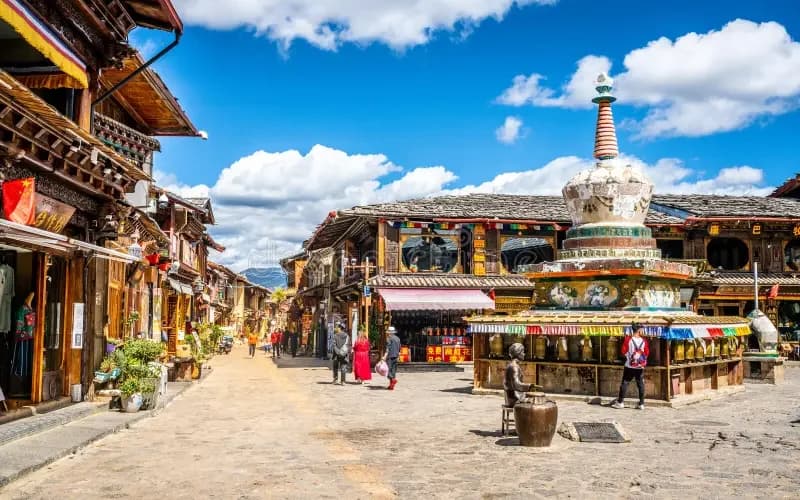
You step off the bus into thin mountain air at 3,200 meters, and immediately the landscape tells you: this is not the China you know. Prayer flags snap in the wind. Yaks graze in alpine meadows. Massive Tibetan monasteries crown the hillsides, their white walls and golden roofs gleaming against impossibly blue sky. The people wear traditional Tibetan dress. Butter tea replaces green tea. You've entered Shangri-La—China's Tibetan frontier.
Shangri-La (香格里拉, formerly Zhongdian) sits in the Diqing Tibetan Autonomous Prefecture of Yunnan, at the intersection of Tibetan, Naxi, and Han Chinese cultures. The name itself was borrowed from James Hilton's 1933 novel "Lost Horizon," which described a mystical Himalayan paradise—and in 2001, the Chinese government officially renamed this town to claim that legend.
Marketing aside, Shangri-La is genuinely special. Songzanlin Monastery is one of the largest Tibetan Buddhist monasteries outside Tibet proper. Dukezong Old Town preserves traditional Tibetan architecture (rebuilt after a 2014 fire). The surrounding highlands—Pudacuo National Park, Napa Lake, Balagezong Grand Canyon—offer pristine alpine scenery. And unlike Tibet itself, Shangri-La is accessible without special permits, making it China's most accessible window into Tibetan culture.
Quick Facts at a Glance
| Item | Details |
|---|---|
| Location | Diqing Prefecture, northwestern Yunnan |
| Altitude | 3,200 meters (10,500 feet) |
| Population | ~170,000 (city), 40% Tibetan |
| Best Time | May–June (spring flowers), Sep–Oct (clear skies) |
| Getting There | Flights from Kunming (1 hr), Lijiang bus (4–5 hr) |
| Permit Required | No (unlike Tibet proper) |
| Time Needed | 2–3 days minimum |
What to See: Shangri-La's Essential Attractions
Shangri-La's appeal lies in its blend of Tibetan culture, Buddhist monasteries, and high-altitude landscapes. Here are the must-see attractions.
Songzanlin Monastery (松赞林寺) — The "Little Potala"
The largest Tibetan Buddhist monastery in Yunnan, housing over 700 monks. Built in 1679 under the 5th Dalai Lama's direction, Songzanlin is often called the "Little Potala Palace" for its striking hilltop position and golden-roofed halls.
| Detail | Info |
|---|---|
| Entry | ¥90 (includes shuttle bus) |
| Hours | 07:30–18:00 |
| Distance | 5km from town center |
| Time needed | 2–3 hours |
What to see:
- Main Assembly Hall: The spiritual heart, filled with thankas, butter sculptures, and the sacred atmosphere of active worship
- Golden Temple (大金瓦殿): The monastery's most sacred building, housing important Buddha statues
- Sacred Lake (拉姆央措湖): The lake in front of the monastery reflects the buildings perfectly on still mornings
Etiquette:
- Walk clockwise around religious objects and buildings
- Remove hat when entering prayer halls
- Ask before photographing monks or ceremonies
- Don't point feet toward altars or sacred objects
Dukezong Old Town (独克宗古城)
The ancient Tibetan town at Shangri-La's heart—though largely rebuilt after a devastating 2014 fire destroyed much of the original structures. The reconstruction maintains traditional Tibetan architecture and atmosphere.
Highlights:
- Moonlight Square (月光广场): The central plaza with the world's largest prayer wheel (requires multiple people to turn)
- Traditional Tibetan houses: Whitewashed walls, ornate windows, rooftop prayer flags
- Handicraft shops: Tibetan jewelry, thankas, religious items
- Tibetan restaurants: Yak meat, butter tea, momos
Best times:
- Morning: Locals doing kora (circumambulation) around sacred sites
- Evening: Sunset light on the old town, Tibetan dancing in the square
Pudacuo National Park (普达措国家公园)
China's first national park, encompassing 1,300 square kilometers of pristine alpine lakes, meadows, and forests at 3,500–4,200m elevation.
| Detail | Info |
|---|---|
| Entry | ¥100 (includes shuttle bus) |
| Hours | 08:00–16:00 (last entry) |
| Distance | 22km from Shangri-La |
| Time needed | Half day to full day |
What to see:
- Shudu Lake (属都湖): Pristine alpine lake with forest walks
- Bita Lake (碧塔海): High-altitude lake surrounded by fir forests
- Alpine meadows: Wildflowers in late spring, grazing yaks
Note: High altitude (3,500m+). Take it slow and watch for altitude symptoms.
Napa Lake (纳帕海)
A seasonal wetland and grassland about 8km from town, transforming dramatically between seasons:
- Summer/Autumn: Lush grassland, grazing yaks and horses, wildflowers
- Winter: Migratory birds including rare black-necked cranes
- Spring: Melting snow, early flowers
Visiting:
- Horse riding across the grassland is popular
- Best at sunrise/sunset for photography
- ¥30–60 depending on access point
Balagezong Grand Canyon (巴拉格宗大峡谷)
A dramatic canyon about 80km from Shangri-La, with sheer cliffs, Tibetan villages, and the sacred Shambhala snow mountain.
| Detail | Info |
|---|---|
| Entry | ¥150–210 (varies by inclusions) |
| Distance | 80km, 2 hours drive |
| Time needed | Full day |
Highlights: Glass walkway, canyon floor walks, traditional Tibetan village, hot springs (some packages include).
Tibetan Culture in Shangri-La
Shangri-La offers the most accessible window into Tibetan culture in China. Here's how to engage respectfully and meaningfully.
Understanding Tibetan Buddhism
Songzanlin and smaller temples throughout Shangri-La follow the Gelug (Yellow Hat) school of Tibetan Buddhism—the same tradition as the Dalai Lama. Key concepts:
- Kora: Clockwise circumambulation of sacred sites, a form of meditation and merit-making
- Prayer wheels: Spinning these wheels sends prayers into the universe; always spin clockwise
- Mani stones: Stones carved with the mantra "Om Mani Padme Hum," stacked at sacred sites
- Butter lamps: Offerings of clarified yak butter flames, representing the light of wisdom
Cultural Etiquette
At monasteries:
- Walk and circle clockwise
- Don't point with one finger (use open hand)
- Remove hats in prayer halls
- Ask permission before photographing
- Speak quietly; don't interrupt prayers
- Don't step on thresholds
General interaction:
- Tibetans may offer you butter tea—it's polite to at least sip some
- Haggling is acceptable in markets but not at monasteries
- Avoid discussing sensitive political topics
Traditional Tibetan Food
| Dish | Description |
|---|---|
| Butter tea (酥油茶) | Salty tea churned with yak butter—an acquired taste but traditional hospitality |
| Tsampa (糌粑) | Roasted barley flour, eaten as porridge or dough |
| Yak meat | Served dried, stir-fried, or in hotpot |
| Momos | Tibetan dumplings, steamed or fried |
| Yak butter | Used in everything from cooking to butter sculpture to lamp offerings |
Dealing with Altitude: Essential Advice
At 3,200m, Shangri-La is high enough that altitude affects most visitors. Here's how to manage it safely.
What to Expect
Most visitors experience mild altitude effects:
- Shortness of breath, especially on stairs
- Mild headache
- Fatigue and sleep disturbance
- Reduced appetite
These are normal and usually resolve within 1–2 days.
Preventing Altitude Sickness
Before arrival:
- Acclimatize gradually if possible (spend a night at 2,400m Lijiang first)
- Stay hydrated for days before
- Avoid alcohol before and on arrival day
- Get good sleep before traveling
On arrival:
- Take it easy the first day—no strenuous activity
- Drink plenty of water (3–4 liters/day)
- Avoid alcohol and heavy meals
- Don't rush up stairs or hills
- Consider taking it slow at Pudacuo (3,500m+) on your first day
Warning Signs
Seek medical attention if you experience:
- Severe headache not relieved by painkillers
- Persistent vomiting
- Confusion or disorientation
- Difficulty breathing at rest
- Loss of coordination
These could indicate serious altitude sickness (AMS). The treatment is descent to lower altitude.
Oxygen and Medication
- Portable oxygen canisters are sold everywhere (¥10–30)—useful for acute breathlessness
- Rhodiola supplements are popular locally but effectiveness is debated
- Diamox (acetazolamide) can prevent altitude sickness but requires prescription and has side effects—consult your doctor before travel
Getting to Shangri-La
Shangri-La is reachable by air or overland from Lijiang. Here are your options.
By Air
Shangri-La Diqing Airport (DIG) has flights from:
- Kunming: 1 hour, multiple daily flights
- Chengdu: 1.5 hours
- Lhasa: 1.5 hours (seasonal)
- Guangzhou, Shenzhen: Seasonal direct flights
From airport to town: 5km, taxi ¥30–40, bus available.
By Bus from Lijiang
The scenic route through Tiger Leaping Gorge area:
- Duration: 4–5 hours
- Cost: ¥70–100
- Frequency: Multiple departures daily from Lijiang Bus Station
- Route: Passes through spectacular gorge scenery
Tip: Sit on the right side for best views of the gorge.
By Road from Tiger Leaping Gorge
If hiking Tiger Leaping Gorge, continue directly to Shangri-La:
- From Walnut Garden: 2 hours by bus
- Avoid backtracking to Lijiang
Getting Around Shangri-La
In town:
- Walking: Dukezong Old Town is compact
- Taxi: Metered, ¥10–15 for most trips
To attractions:
- Songzanlin: Bus ¥3 or taxi ¥20
- Pudacuo: Taxi ¥100–150 round trip, or join tour
- Napa Lake: Taxi ¥50–80 round trip
When to Visit Shangri-La
Shangri-La's high altitude means distinct seasons with different appeals. Here's when to go. For a country-wide overview, see the best time to visit China.
By Season
Spring (April–May) ⭐⭐⭐⭐⭐ Wildflowers carpet the meadows. Rhododendrons bloom on hillsides. Clear skies and warming temperatures. One of the best times to visit.
Summer (June–August) ⭐⭐⭐⭐ Lush green landscapes, warm days (15–25°C). Monsoon brings afternoon showers but mornings are usually clear. Wildflowers peak in June.
Autumn (September–October) ⭐⭐⭐⭐⭐ Clear blue skies, golden light, comfortable temperatures. Forests turn yellow and red. Minimal rain. Excellent for photography.
Winter (November–March) ⭐⭐⭐ Cold (−5°C to 10°C), especially at night. Very dry and clear. Snow possible. Fewer tourists. Napa Lake hosts migratory birds. Some attractions may have reduced hours.
Best Months
| Month | Highlights |
|---|---|
| May | Wildflowers, rhododendrons |
| June | Peak flowers, long days |
| September | Clear skies, autumn colors beginning |
| October | Golden larches, stable weather |
Avoid
- Chinese National Day (October 1–7): Extremely crowded
- Chinese New Year: Some closures, cold weather
- Rainy season peaks (July–August): Afternoon storms reliable
Accommodation in Shangri-La
Shangri-La offers everything from budget hostels to luxury Tibetan-style hotels. Here's how to choose.
Where to Stay
Dukezong Old Town:
- Atmospheric traditional Tibetan guesthouses
- Walking distance to square and restaurants
- Some buildings still have authentic old structure (pre-fire)
- Can be cold at night—ensure heating available
New Town:
- Modern hotels with reliable amenities
- Better heating and hot water
- Less atmosphere but more comfort
- Taxi to Old Town needed
Budget Guide
| Type | Price Range | Notes |
|---|---|---|
| Hostel dorm | ¥40–80 | Social, basic |
| Guesthouse | ¥150–300 | Tibetan style, en-suite |
| Mid-range hotel | ¥300–600 | Modern amenities |
| Luxury | ¥800–2,000 | Songtsam and similar |
Heating Note
At 3,200m, nights are cold even in summer. Winter temperatures drop well below freezing. Verify your accommodation has:
- Electric blankets (common)
- Central heating (less common)
- Hot water (confirm timing)
Practical Tips
Shangri-La has unique characteristics that affect your visit. Here's what to know.
What to Pack
Essential:
- Warm layers (cold evenings year-round)
- Sun protection (high altitude = intense UV)
- Comfortable walking shoes
- Day pack for excursions
- Cash (some places don't take cards)
Useful:
- Lip balm and moisturizer (dry air)
- Sunglasses (glare is intense)
- Portable oxygen canister (available locally but good to have)
- Hand warmers (winter)
Money
- ATMs in town center and Old Town
- Many places accept WeChat Pay / Alipay
- Smaller guesthouses and rural attractions may need cash
- Budget ¥400–600/day for moderate travel
Connectivity
- WiFi in hotels and most restaurants
- Mobile signal good in town, spotty in parks
- VPN needed for foreign websites (as elsewhere in China)
Health Considerations
- Altitude: See altitude section above
- Sun: High altitude means stronger UV—sunscreen essential
- Dryness: Drink lots of water, use moisturizer
- Hygiene: Generally good, but be careful with street food
Combining with Other Yunnan Destinations
Shangri-La is the northern anchor of Yunnan's tourism triangle. Here's how to connect it with other destinations.
The Yunnan Triangle
Kunming → Dali → Lijiang → Shangri-La is the classic Yunnan route:
| Leg | Transport | Duration |
|---|---|---|
| Kunming → Dali | High-speed train | 2 hours |
| Dali → Lijiang | Bus or train | 2–3 hours |
| Lijiang → Shangri-La | Bus | 4–5 hours |
Suggested Itineraries
3 Days Shangri-La:
- Day 1: Arrive, acclimatize, Dukezong Old Town evening
- Day 2: Songzanlin Monastery morning, Napa Lake afternoon
- Day 3: Pudacuo National Park, departure
5 Days Lijiang + Shangri-La:
- Days 1–2: Lijiang (Old Town, Jade Dragon Snow Mountain)
- Day 3: Bus to Shangri-La via Tiger Leaping Gorge viewpoint
- Day 4: Songzanlin, Dukezong
- Day 5: Pudacuo, return to Lijiang or fly out
7 Days with Tiger Leaping Gorge Trek:
- Days 1–2: Lijiang
- Days 3–4: Tiger Leaping Gorge (hike)
- Days 5–7: Shangri-La (Songzanlin, Pudacuo, Napa Lake)
Planning Your China Trip
- Best time to visit — Month-by-month guide to weather, crowds, and holiday periods
- Is China safe? — Safety overview covering health, transport, and adventure activities across China
- Essential tips for first-timers — Apps to download, payment setup, cultural etiquette, and common mistakes
About This Guide
This guide was written by the Gopagoda Travel team based on multiple visits to Shangri-La across seasons. The town continues to develop and change—verify specific details locally, especially regarding reconstruction in the Old Town.