
Overview
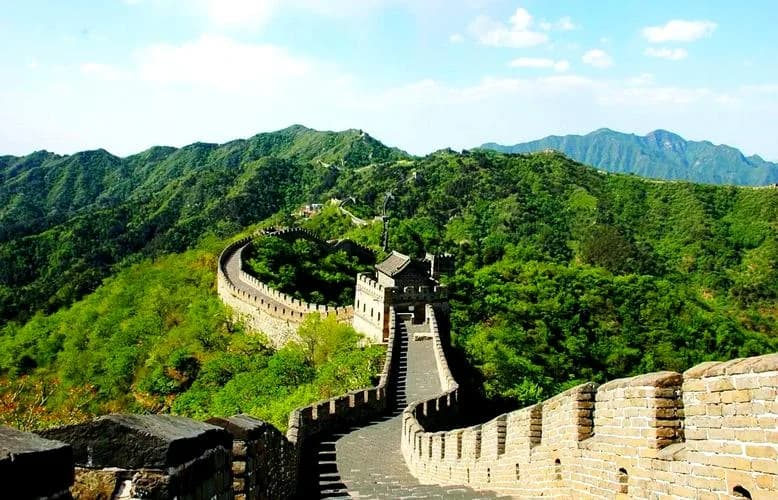
The first thing you notice at Mutianyu isn't the wall—it's the silence. After the cable car glides you above a canopy of chestnut trees and wild apricots, you step onto a 650-year-old stone walkway, and the noise of Beijing simply stops. No car horns, no construction, no crowds pushing past. Just wind, birdsong, and one of humanity's greatest structures stretching across mountain ridges in both directions.
Mutianyu (慕田峪) is widely considered the best Great Wall section near Beijing—and for good reason. It's less crowded than Badaling, more scenic, better preserved, and offers something no other section does: a toboggan slide that winds 1,580 meters down the mountain. Whether you're a serious hiker chasing dramatic eastern ridgeline views or a family looking for a comfortable half-day with cable car access, Mutianyu delivers.
Built in 1368 by Xu Da, one of the founding generals of the Ming Dynasty, on foundations dating back to the Northern Qi Dynasty (550 AD), this 5.4-kilometer stretch features 23 watchtowers, unique double-sided battlements, and the remarkable "Three Towers Standing Together" at the Zhengguantai pass. In 1987, it was inscribed as part of the UNESCO World Heritage "Great Wall" site.
This guide covers everything you need: hiking routes, cable car vs. toboggan, current ticket prices, how to get here from Beijing, where to eat, and the brand-new summer night experience.
Quick Facts at a Glance
| Item | Details |
|---|---|
| Opening Hours | Peak (Mar 16–Nov 15): Mon–Fri 07:30–18:00, Sat–Sun 07:30–18:30 · Off-peak (Nov 16–Mar 15): 08:00–17:30 |
| Entrance Fee | ¥40 ($5.50) standard · ¥45 with souvenir postcard |
| Cable Car | ¥140 round trip · ¥100 one-way up (to Tower 14) |
| Toboggan Slide | ¥100 one-way down — 1,580 m of pure fun |
| Shuttle Bus | ¥15 (parking lot → ticket gate, required) |
| Getting There | 73 km from Beijing · ~1.5 hours via Jingcheng Expressway, Exit 13 (Beitai Road) |
| Best Time to Visit | Autumn (Sep–Nov) for golden foliage · Weekday mornings for fewest crowds |
| Difficulty | Easy to challenging depending on route (cable car makes it accessible to all) |
| Phone | 010-61626022 |
What to See and Do at Mutianyu: Watchtowers, Ridgeline Hikes & the Famous Toboggan
Mutianyu offers 5.4 km of restored wall with 23 watchtowers, but only a 2.5 km section is open to visitors. The cable car drops you at Tower 14, the central hub—from there, you choose your adventure: east for drama, west for ease, and down by toboggan for the best ending imaginable.
The Eastern Section (Towers 14→20) — Best Views, Fewer Crowds
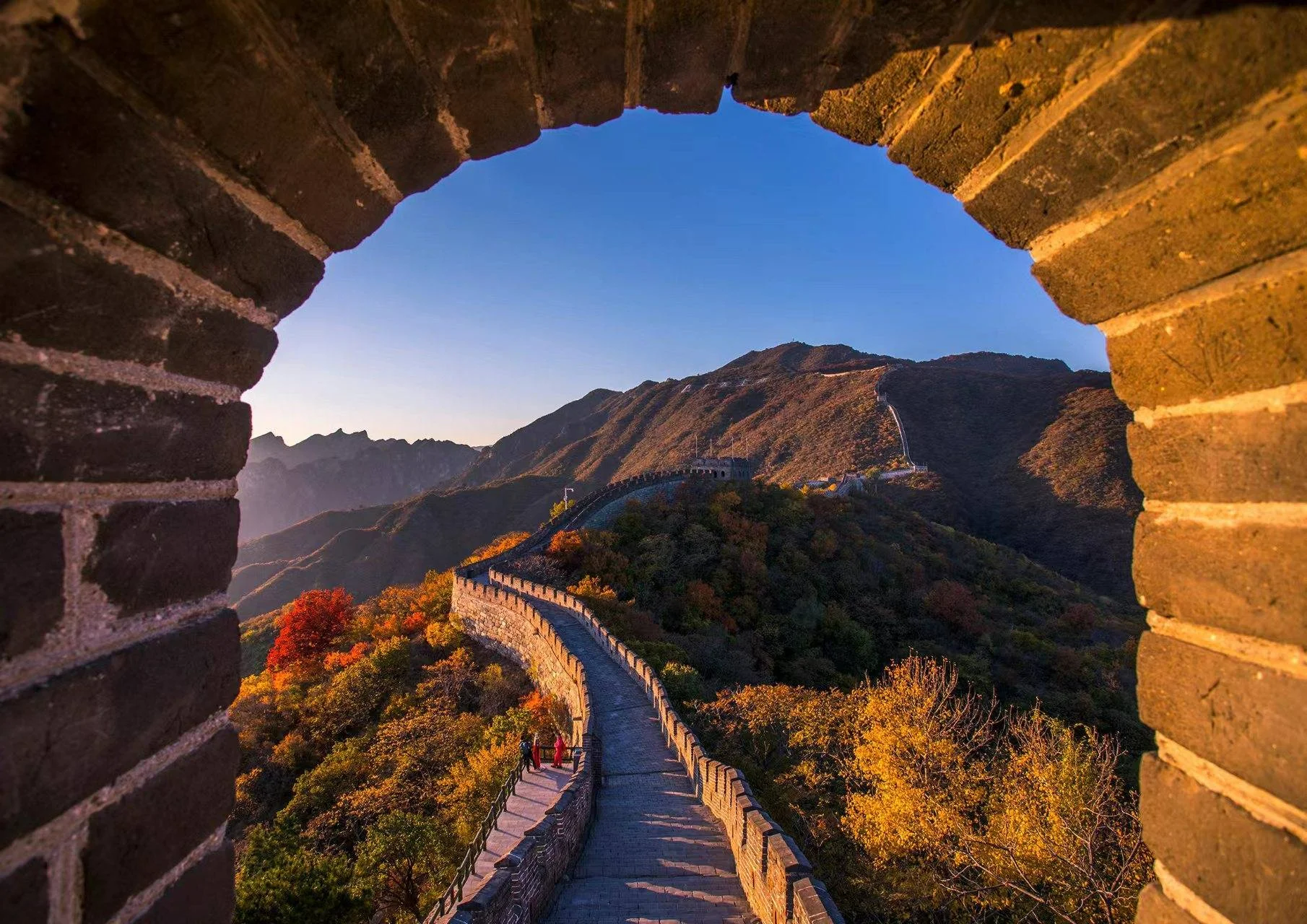
This is the route that makes Mutianyu famous. Heading east from Tower 14, the wall climbs steeply along a knife-edge ridgeline, each watchtower revealing a more dramatic panorama than the last.
What to expect:
- Towers 15–17: Steady climbing with increasingly spectacular views. The wall snakes along razor-sharp ridges with forested valleys dropping away on both sides.
- Towers 18–19: The steepest section—some steps approach 60–70 degrees. Handrails are provided, but your legs will know they've worked. This is also the most photogenic stretch, where the wall seems to defy gravity as it climbs the mountain.
- Tower 20 "Hero's Summit": The highest accessible point at roughly 1,000 meters elevation. On clear days, unrestored wall sections stretch into the distance in every direction—a visceral reminder that this structure runs for thousands of kilometers. There's a sign here that reads "You are a true hero for reaching this point."
| For | Active hikers, photographers, anyone wanting the "real" Great Wall experience |
| Difficulty | Moderate to challenging (steep steps, significant elevation) |
| Distance | ~1.5 km one-way |
| Time | 1–1.5 hours one-way |
| Crowds | 30–40% fewer people than the western section |
Photography tip: Shoot from Tower 18 looking toward Tower 20 for the iconic "dragon spine" shot—the wall snaking up a near-vertical mountain. Best light: 9:00–11:00 AM or 3:00–5:00 PM.
The Western Section (Towers 14→6) — Easier, Family-Friendly
If the eastern section is about conquering, the western section is about enjoying. Gentler gradients, well-maintained paths, and interpretive signs make this ideal for families, older visitors, or anyone who simply wants a relaxed Great Wall walk.
Highlights:
- Towers 12–13: Well-preserved battlements with bilingual signs explaining defensive architecture—how arrow slits were angled, why merlons alternate in height.
- Tower 11: Small exhibition on Great Wall construction techniques.
- Towers 8–10: Quieter stretch with beautiful valley views. Good for contemplation.
- Tower 6: End of the line for the western section. Connects to the chairlift station and the famous toboggan slide.
| For | Families, older visitors, anyone wanting a comfortable Great Wall experience |
| Difficulty | Easy to moderate |
| Distance | ~1 km one-way |
| Time | 45 min–1 hour one-way |
Tower 4: Zhengguantai (正关台) — The Architectural Marvel
Don't miss this. Unlike any other pass on the Great Wall, Zhengguantai consists of three hollow watchtowers standing shoulder to shoulder—two smaller flanking towers with a larger central tower—connected by walkways with viewing pavilions on top. The gate itself is offset to the east rather than centered, a deliberate military design to create a killing field for approaching enemies.
This is a UNESCO-highlighted structure and one of the rarest architectural features on the entire Great Wall.
The Toboggan Slide — 1,580 Meters of Pure Fun
Let's be honest: the toboggan is the thing people talk about most after visiting Mutianyu. And it deserves every bit of the hype.
What it is: A stainless steel track that winds 1,580 meters down the mountain from near Tower 6 to the base parking area. You sit in a small plastic cart with a hand brake between your legs—pull back to slow down, release to fly. The ride takes 5–7 minutes, weaving through forest canopy with mountain views flashing between the trees.
Why everyone loves it:
- It's genuinely thrilling—more roller coaster than transport
- After 2–3 hours of hiking ancient stone steps, zooming down a mountain in a cart feels gloriously absurd
- Kids go wild for it (and so do adults who pretend they're doing it "for the kids")
- It saves your knees from a brutal 30-minute downhill walk
- The mountain scenery during the descent is beautiful in its own right
Practical info:
| Item | Details |
|---|---|
| Price | ¥100 ($14) one-way |
| Length | 1,580 meters |
| Duration | 5–7 minutes |
| Queue time | 10–15 min (weekdays), 20–40 min (peak weekends, 10 AM–2 PM) |
| Height limit | Children under 1.2 m cannot ride alone |
| Not suitable for | Pregnant women, people with back/neck problems |
Pro tips:
- Ride the toboggan between 2:00–4:00 PM when queues are shorter
- Don't brake too hard behind slow riders—maintain a safe following distance
- If you hiked the challenging eastern section, the toboggan is the perfect reward for tired legs
- Autumn rides are spectacular—you're essentially sliding through a tunnel of red and gold leaves
Best Photo Spots
| Location | Best For | Best Time |
|---|---|---|
| Tower 18 looking east | Iconic "dragon spine" wall shot | 9:00–11:00 AM |
| Tower 20 panoramic | 360° mountain vistas | Any clear day |
| Tower 14 looking east | Wall snaking along ridgeline | 3:00–5:00 PM (golden hour) |
| Base parking area looking up | Wall on mountain ridge with forest | Autumn for colorful foliage |
| Zhengguantai (Tower 4) | Three-tower architectural marvel | Morning light |
Practical Tips: What to Wear, Bring & Know Before You Go
Mutianyu is a real mountain hike, not a flat boardwalk. The right shoes, enough water, and knowing what to expect will make the difference between "unforgettable" and "why didn't anyone warn me."
What to Wear
Footwear is everything. The Great Wall steps are uneven, steep, and can vary from 10 cm to 40 cm in height within a single flight. After rain, they get slippery.
- ✅ Best: Hiking boots or trail runners with ankle support and grip
- ✅ Acceptable: Sturdy sneakers with good tread
- ❌ Don't even think about it: Sandals, flip-flops, high heels, dress shoes, or anything with smooth soles
Clothing by season:
- Spring/Autumn: Layers—mornings can be cool (10–15°C at the top), afternoons warm (20–25°C)
- Summer: Light, breathable clothes. Hat and sunscreen are essential—there's zero shade on the wall
- Winter: Full cold-weather gear (−5°C to 5°C). Thermals, warm jacket, gloves, hat. Wind on the ridgeline cuts right through you
What to Bring
| Must-Have | Nice to Have |
|---|---|
| Water (2L per person minimum) | Hiking poles (helpful on steep eastern section) |
| Sunscreen + hat | Small towel (summer) |
| Snacks/energy bars | Portable charger (for phone cameras) |
| Fully charged phone/camera | Tissues/wet wipes |
| Small backpack | Light rain jacket (weather changes fast) |
Food on the wall is extremely limited—a few drink vendors near Tower 14 and that's about it. Bring your own.
Visiting with Kids or Elderly
Mutianyu is one of the most accessible Great Wall sections, thanks to the cable car:
With children (5+):
- Take the cable car up to Tower 14
- Walk the western section (Towers 14→6)—gentler slopes, handrails throughout
- Ride the toboggan down together (kids love it!)
- Allow 3–4 hours total
With elderly visitors:
- Cable car to Tower 14 is smooth and comfortable (enclosed gondola)
- Walk a short stretch in either direction—even just 2–3 towers is a meaningful experience
- Cable car back down
- The eastern section is too steep for most elderly visitors
With very young children (under 5): A baby carrier or backpack works better than a stroller. There are no stroller-friendly paths on the wall.
Safety Tips
- Hold handrails on steep sections—seriously, the eastern stretch is no joke
- Watch for uneven steps—heights vary wildly, which catches people off guard
- Don't climb unrestored sections beyond Tower 20—they're closed for good reason
- Start early to avoid afternoon heat (summer) and ensure enough time
- Check weather before going—fog kills visibility, rain makes steps dangerous
- Stay hydrated—altitude and sun exposure cause faster dehydration than you'd expect
Our Recommended Routes: Smart Itineraries for Every Schedule
Three tested itineraries based on how much time and energy you have. Each one includes the best way up, the optimal hiking route, and the most satisfying way down.
Route 1 — The Express Visit (4–5 Hours Total)
| For | Time-limited visitors, families with young children |
| Best time | Arrive by 9:00 AM |
| Wall time | ~2 hours |
The plan:
- Cable car up to Tower 14 (10 min)
- Walk west to Tower 8 or 6 (45 min)
- Return to Tower 14 (30 min)
- Cable car or toboggan down (10 min)
- Lunch at the base
What you'll see: A genuine Great Wall experience on the gentler western section. Enough to understand the scale and feel the history without exhausting yourself.
Route 2 — The Classic Full Day (6–7 Hours Total)
| For | Most visitors — the best balance of experience and effort |
| Best time | Arrive by 8:30 AM |
| Wall time | ~3.5 hours |
The plan:
- Cable car up to Tower 14 (10 min)
- Hike east to Tower 20 "Hero's Summit" (1.5 hours)
- Return to Tower 14 — rest, snacks, photos (30 min)
- Walk west to Tower 6 (45 min)
- Toboggan slide down! (7 min of glory)
- Lunch at Mubus Lounge or restaurants
What you'll see: Everything. The challenging eastern ridgeline, the peaceful western stretch, panoramic views from the highest point, and the toboggan grand finale. This is the Mutianyu experience.
Route 3 — The Photography & Hiking Adventure (Full Day, 8–9 Hours)
| For | Photographers, serious hikers, Great Wall enthusiasts |
| Best time | Arrive by 8:00 AM (or earlier for sunrise) |
| Wall time | ~5 hours |
The plan:
- Cable car up to Tower 14 (10 min)
- Hike east to Tower 20 — shoot morning light (2 hours)
- Return to Tower 14, continue west to Tower 4 Zhengguantai (1.5 hours)
- Continue to Tower 1 "Great Corner Tower" if energy permits (30 min)
- Return to Tower 6 area (30 min)
- Lunch break at base (1 hour)
- Optional: return to wall for golden hour shooting (2 hours)
- Toboggan down before closing
What you'll see: The complete Mutianyu experience including rarely visited Tower 1 "Great Corner Tower" (大角楼), where three sections of wall converge in a unique Y-junction.
How to Choose Your Route
| Factor | Route 1 (Express) | Route 2 (Classic) | Route 3 (Full Day) |
|---|---|---|---|
| Total time | 4–5 hours | 6–7 hours | 8–9 hours |
| Fitness needed | Low | Moderate | High |
| Best for | Families, elderly | Most visitors | Hikers, photographers |
| Tower 20? | No | Yes | Yes |
| Toboggan? | Optional | Yes! | Yes |
Planning a trip to China?
Our travel experts can help you create a personalized itinerary based on your interests and budget.
Getting There: All Transport Options from Beijing
Mutianyu is 73 km northeast of Beijing. You can't take the subway there, but you have several good options ranging from ¥20 (public bus) to ¥800 (private tour with guide). Here's every option with honest pros and cons.
Option 1: Private Car or Guided Tour (Most Convenient)
The easiest way by far. A driver picks you up at your hotel and drops you at the parking lot. No navigation, no transfers, no stress.
| Type | Cost | Includes |
|---|---|---|
| Private car (round trip) | ¥400–600 ($55–85) | Driver, parking, waiting |
| Day tour with guide | ¥500–800 ($70–110) | Hotel pickup, entrance, cable car, English guide, lunch |
Book through: Hotel concierge, GoPagoda Travel, Trip.com, Viator, or Didi (requires Chinese phone number).
Pro tip: A guided tour often works out cheaper than organizing private car + tickets separately, and you get historical context that makes the wall come alive.
Option 2: Mubus Direct Bus (Best Budget-Convenience Balance)
Mubus (慕巴士) is the dedicated tourist shuttle and the smartest budget option. One bus, no transfers, English-speaking staff.
| Detail | Info |
|---|---|
| Departures | Daily 8:00 AM and 10:00 AM |
| Pickup points | Dongzhimen subway (Line 2) / Yonghegong subway |
| Duration | ~1.5 hours to Mutianyu |
| Return | 14:30–15:00 from Mutianyu |
| Perks | Free shuttle bus within scenic area, skip ticket queues, luggage storage |
Mubus also operates a lounge at the base with a ¥50–60 all-you-can-eat buffet, free rest area, and hot water—a lifesaver after hiking.
Book at: mubus.com or through their WeChat official account.
Option 3: Public Bus (Cheapest but Slowest)
Only if you're on a strict budget and comfortable navigating Chinese public transport.
Route:
- Metro to Dongzhimen Station (东直门)
- Bus 916 Express to Huairou Beidajie (怀柔北大街) — ~1.5 hours, ¥12
- Transfer to Bus H7, H23, H24, H35, or H36 to Mutianyu — ~30 min, ¥8
| Total cost | ¥20–30 ($3–4) one-way |
| Total time | 2.5–3 hours each way |
| Language needed | Basic Chinese for bus navigation |
| Return | Last buses leave by 4:00–5:00 PM — don't miss them |
Transport Comparison
| Private Car | Mubus | Public Bus | |
|---|---|---|---|
| Cost | ¥400–800 | ¥80–100 | ¥20–30 |
| Time | 1.5 hours | 1.5 hours | 2.5–3 hours |
| Transfers | 0 | 0 | 2 |
| English support | Varies | Yes | No |
| Flexibility | Full | Fixed schedule | Fixed routes |
| Best for | Groups, families | Solo/couple travelers | Budget backpackers |
Tickets, Cable Car & Costs: What You'll Actually Pay
The entrance ticket is just the beginning. Between the shuttle bus, cable car, and toboggan, costs add up. Here's a transparent breakdown so you can budget accurately—and tips on where to save. For a full picture of travel costs across China, see our budget guide.
Entrance Tickets (2025/2026 Prices)
| Ticket | Price | Notes |
|---|---|---|
| Adult entrance | ¥40 ($5.50) | Required for all visitors |
| Entrance with postcard | ¥45 | Nice souvenir |
| Children (under 1.2m) | Free | |
| Children (1.2m+) / Students | ¥20 | With student ID |
| Seniors (60+) | ¥20 | With ID |
| Beijing residents (60+) | Free | With Beijing hukou ID |
Cable Car, Chairlift & Toboggan
There are two systems to get up to the wall:
| System | Goes To | Round Trip | One-Way Up | One-Way Down |
|---|---|---|---|---|
| Cable Car (enclosed gondola) | Tower 14 | ¥140 | ¥100 | ¥100 |
| Chairlift (open-air) | Tower 6 area | ¥120 | ¥100 | ¥100 |
| Toboggan Slide | Base (from Tower 6) | — | — | ¥100 |
Which to choose:
- Most popular: Cable car up to Tower 14 → hike → toboggan down from Tower 6. This gives you the full experience.
- Easiest: Cable car round trip to Tower 14. Walk a bit in each direction, cable car back.
- Most fun: Cable car up → hike east to Tower 20 → hike west to Tower 6 → toboggan down!
Budget Calculator
| Scenario | Cost Per Person |
|---|---|
| Budget: Walk up + walk down | ¥55 (entrance + shuttle) |
| Standard: Cable car round trip | ¥195 (entrance + shuttle + cable car) |
| Best value: Cable car up + toboggan down | ¥255 (entrance ¥40 + shuttle ¥15 + cable car up ¥100 + toboggan ¥100) |
| Full experience with guided tour | ¥500–800 (everything included) |
Do You Need to Book in Advance?
Weekdays: Walk-up tickets usually fine, but online saves ¥5–10 and skips the queue.
Weekends & holidays: Book online 1–3 days ahead through:
- Official WeChat: "慕田峪长城" (recommended)
- Trip.com, Klook, or Viator
Peak holidays (Oct 1–7, May 1–3): Book as early as possible—cable car tickets can sell out.
Mutianyu vs Badaling: Which Great Wall Section Should You Visit?
This is the most common question travelers ask. Short answer: Mutianyu wins for most visitors. Here's why—and the one scenario where Badaling makes more sense.
Side-by-Side Comparison
| Aspect | Mutianyu | Badaling |
|---|---|---|
| Crowds | Moderate (manageable) | Extreme (shoulder-to-shoulder on peak days) |
| Scenery | Forested mountains, dramatic ridgelines | Bare slopes, wide-angle views |
| Preservation | Excellent — authentic Ming-era feel | Heavily restored, more "theme park" |
| Hiking options | Eastern + western sections, multiple routes | One main route (north or south) |
| Fun factor | Toboggan slide! | Escalator/tunnel (functional, not fun) |
| Distance from Beijing | 73 km, 1.5–2 hours | 60 km, 1–1.5 hours |
| Accessibility | Cable car + gentler western section | More accessible with wheelchair ramp on south side |
| Best for | Hikers, photographers, families wanting quality | Visitors with very limited time, mobility concerns |
When to Choose Mutianyu
- You want a real Great Wall experience, not a tourist conveyor belt
- You have at least half a day (5+ hours)
- You want to actually walk on the wall without pushing through crowds
- You're traveling with kids who'd love the toboggan
- You care about photos—Mutianyu's forested backdrop beats Badaling's barren hills
When to Choose Badaling
- You have less than 4 hours total (it's 15–20 minutes closer to Beijing)
- You need full wheelchair accessibility (Badaling's south side has ramps)
- It's a weekday in winter (Badaling's crowds are manageable off-season)
Best Time to Visit Mutianyu
The short answer: autumn weekday mornings. But every season has something special, and winter's empty wall under snow is an experience few tourists ever see. For a broader look at the best time to visit China across all regions, see our seasonal guide.
By Season
Autumn (September–November) ⭐⭐⭐⭐⭐ THE BEST SEASON
Mutianyu's 96% forest coverage turns into a symphony of red, gold, and orange. The air is crisp, the sky is clear, and the wall photographed against autumn foliage is one of China's most iconic images. Temperatures sit at a comfortable 10–22°C—perfect hiking weather.
Best weeks: Late September through early November.
Spring (April–May) ⭐⭐⭐⭐
Wild flowers bloom across the mountain slopes, temperatures are mild (15–22°C), and the fresh green canopy makes for beautiful photos. Note: the scenic area reopens around April 15 after winter closure.
Summer (June–August) ⭐⭐⭐
Lush and green, but hot (25–35°C) and humid. Afternoon thunderstorms are common. The upside: summer 2025 introduced night visits (see below). Bring extra water, sunscreen, and start early.
Winter (December–February) ⭐⭐⭐⭐
Snow-covered Great Wall with virtually no other tourists—this is a photographer's dream. Temperatures drop to −5°C to 5°C. Crystal-clear air means exceptional visibility. Just wear proper cold-weather gear and grippy shoes—icy steps are serious business. Note: the scenic area may close from mid-November to mid-April (check before going).
By Day of Week
| Crowd Level | Cable Car Queue | |
|---|---|---|
| Monday–Friday | 40–50% fewer visitors | 5–15 min |
| Saturday | Busy | 20–40 min |
| Sunday | Moderate-busy | 15–30 min |
By Time of Day
| Time | Crowds | Light | Notes |
|---|---|---|---|
| 8:00–10:00 AM ⭐ | Lightest | Beautiful morning glow | Best time to start |
| 10:00 AM–2:00 PM | Peak | Harsh midday | Tour groups arrive |
| 2:00–5:00 PM | Thinning | Golden hour magic | Great for photography |
Dates to Avoid
- October 1–7 (National Day "Golden Week") — Extreme crowds everywhere
- May 1–3 (Labor Day) — Very crowded
- Chinese New Year (late Jan/Feb) — Some closures possible
Night Visit: Mutianyu After Dark (Summer 2025)
New for 2025: Mutianyu now offers summer evening visits with the wall illuminated against the night sky. It's a completely different experience from daytime—quieter, cooler, and genuinely magical.
What You Need to Know
| Detail | Info |
|---|---|
| Season | Late June – August 31 (also May Day and Mid-Autumn/National Day holidays) |
| Hours | 17:30–21:00 (last entry 20:30) |
| Lights on | ~19:00 (adjusts with sunset) |
| Ticket | ¥200 — includes entrance, shuttle bus, and unlimited cable car rides |
| Open section | Towers 10–15 (the scenic core) |
| Booking | WeChat: "慕田峪长城" → "夜场票预订" |
What to Expect
The illuminated wall snaking across dark mountains is genuinely breathtaking—it's the kind of view that makes you stop and just stare. On weekends, the scenic area hosts cultural performances: traditional guzheng (古筝) music, hanfu fashion shows, and dance performances along the wall.
The unlimited cable car rides mean you can go up and down as many times as you want—ride up for sunset, come down for dinner, go back up to see the lights. It's a relaxed, festival-like atmosphere that's completely different from the daytime hiking experience.
Is It Worth ¥200?
Yes, if you're visiting Beijing between late June and August. The daytime entrance + cable car combo already costs ¥175+, so for ¥25 more you get the night experience with unlimited cable car access. The cooler evening temperatures (especially in July–August) are a bonus.
Where to Eat Near Mutianyu
You won't go hungry at Mutianyu—but your best options are at the base, not on the wall. Pack snacks for the hike, then reward yourself with rainbow trout or farmhouse cooking when you come down.
Inside the Scenic Area (Base Level)
Mutianyu Town commercial street (between parking lot and ticket gate) has:
| Restaurant | Type | Price Range |
|---|---|---|
| 馅老满 (Xian Lao Man) | Chinese — dumplings, pies, home cooking | ¥25–40/person |
| Burger King | Western fast food | ¥30–50/person |
| Subway | Western sandwiches | ¥30–50/person |
| 田缘茶餐厅 | Café — sandwiches, coffee | ¥30–40/person |
| 老北京炸酱面馆 | Chinese — noodles, simple meals | ¥20–35/person |
| Mubus Lounge | Buffet — 10+ hot dishes, salads, fruit, soup | ¥50–60/person |
Mubus Lounge is the best value: ¥50–60 for an all-you-can-eat buffet with 10+ hot dishes, cold dishes, fruit, and soup. Located in the scenic area center, it also offers free rest area, hot water, and luggage storage.
On the wall: Only a few drink vendors near Tower 14. Bring your own food and water.
Rainbow Trout Valley (虹鳟鱼一条沟)
This is the local specialty and a Huairou institution. Located along the Yanqi River (雁栖河) in Yanqi Town, about 20 minutes from Mutianyu, dozens of restaurants serve rainbow trout prepared multiple ways: sashimi, grilled, braised, and as fish-bone soup.
Top picks:
- 鱼师傅 (Fish Master) — Highest-rated on Dianping
- 渔家傲 (Fisherman's Pride) — Great riverside setting
- 向外有鱼 (Fish Outside) — Modern take on traditional recipes
Budget: ¥80–150/person for a full trout meal.
Best combo: Visit Mutianyu in the morning, toboggan down by early afternoon, drive 20 minutes to Rainbow Trout Valley for a late lunch.
Farmhouse Restaurants (农家乐)
Along Fanqi Road (范崎路), between Mutianyu and the main highway, you'll find:
- 山吧 (Mountain Bar) — Popular café-restaurant with mountain views
- 那里 (Nali / "There") — Rustic dining, good for groups
- 劳模山庄 (Laomo Resort) — Traditional farmhouse cooking
These are great for a relaxed post-hike meal with local mountain dishes: stir-fried wild vegetables, corn bread, and braised local chicken.
Nearby Attractions & Day Trip Combos
Mutianyu makes a full day on its own, but if you're in the Huairou area for longer, several attractions pair well with a Great Wall visit.
Within 30 Minutes of Mutianyu
- Huanghuacheng Water Great Wall (黄花城水长城) — 25 min drive. The only Great Wall section that plunges into a lake. Stunning, uncrowded, and a completely different vibe from Mutianyu.
- Hongluo Temple (红螺寺) — 30 min drive. Ancient Buddhist temple surrounded by ancient ginkgo trees. Especially beautiful in autumn.
Combine with Other Activities
- Morning: Mutianyu Great Wall (arrive by 8:30 AM, depart by 1:00 PM)
- Afternoon: Rainbow Trout Valley lunch → Yanqi Lake (雁栖湖) walk, or Hongluo Temple visit
- Evening: Return to Beijing by 5:00–6:00 PM
For a multi-day Great Wall experience, consider also visiting the Forbidden City or the Summer Palace on a separate day.
History & Cultural Background
Mutianyu's strategic importance spans 1,500 years—from the Northern Qi Dynasty through the Ming era's most famous generals. Understanding the history transforms the wall from impressive scenery into a living monument.
Timeline
| Period | Event |
|---|---|
| 550–577 AD (Northern Qi) | First fortifications built at Mutianyu |
| 1368 (Ming Dynasty) | General Xu Da (徐达) rebuilds the wall on Northern Qi foundations under Emperor Zhu Yuanzhang's orders |
| 1404 | Mutianyu Pass (慕田峪关) officially established |
| 1569 | Anti-pirate hero Qi Jiguang (戚继光) and Tan Lun (谭伦) reinforce the wall, adding the watchtowers and double-sided battlements we see today |
| 1987 | Inscribed as UNESCO World Heritage site (as part of "The Great Wall") |
| 1988 | Opened to tourists |
Why Mutianyu Was So Important
Mutianyu sits at the junction between the passes of Juyongguan (居庸关) to the west and Gubeikou (古北口) to the east—essentially guarding Beijing's northern throat. It was one of the key defensive positions protecting both the capital and the Ming imperial tombs.
The famous double-sided battlements (both inner and outer walls have merlons and arrow slits) are a feature almost unique to Mutianyu, reflecting its importance: defenders needed to fight enemies on both sides in case the wall was breached elsewhere.
Planning Your China Trip
- How much does it cost? — Complete breakdown of daily budgets, attraction fees, and transport costs across China
- Best time to visit — Month-by-month guide to weather, crowds, and holiday periods
- Essential tips for first-timers — Apps to download, payment setup, cultural etiquette, and common mistakes
About the Author
This guide was written by the Gopagoda Travel team based on multiple on-site visits, official Chinese-language sources, and current traveler reports. We update pricing and practical details seasonally.
Editorial Standards
This guide reflects firsthand experience and thorough research across Chinese and English sources. All prices were verified against official channels (景区官方微信) as of January 2026. Opening hours and seasonal programs (like night visits) are subject to change—we recommend confirming with the scenic area hotline (010-61626022) before your visit. If you find outdated information, please let us know.