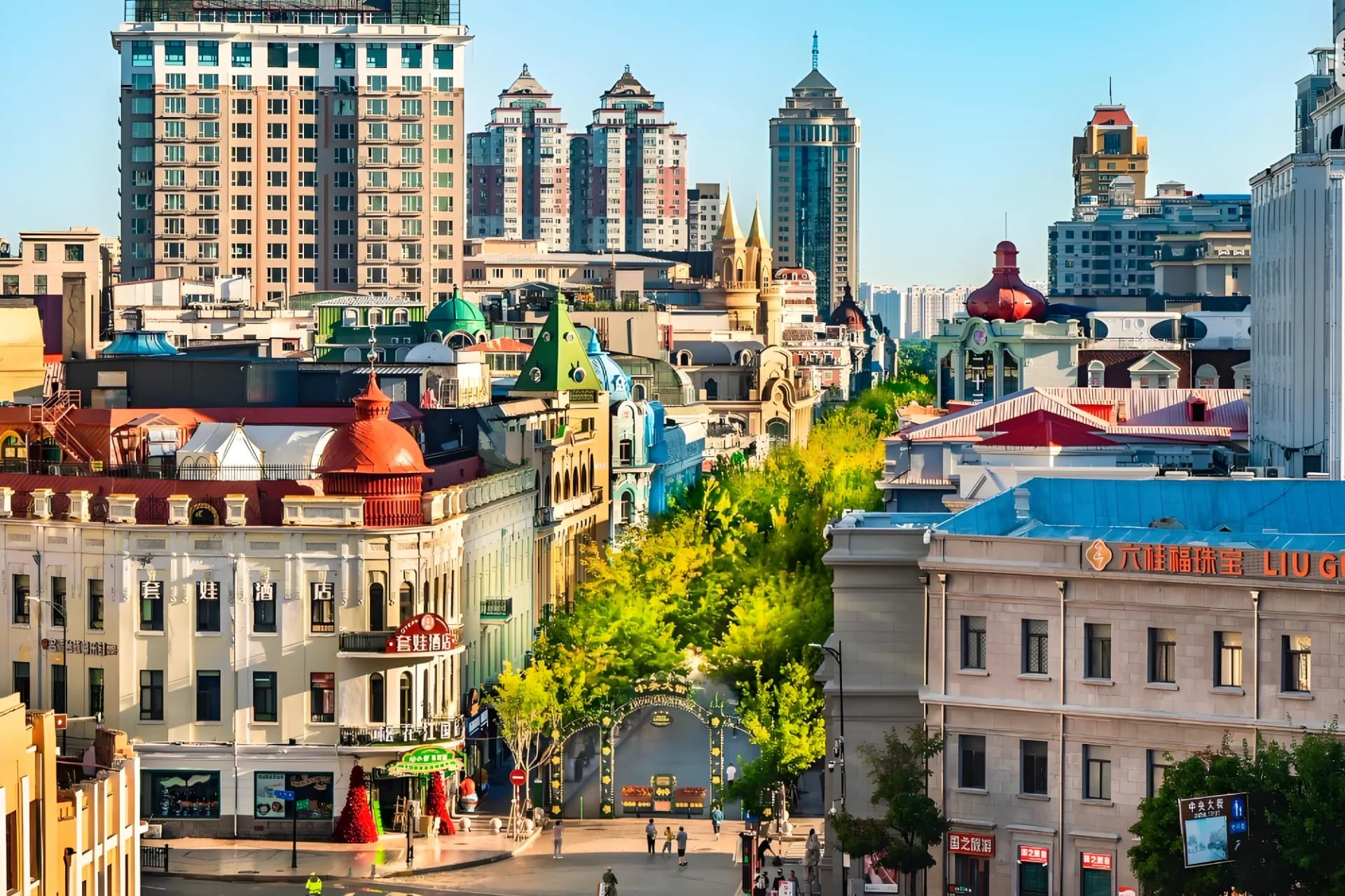

Overview
You're walking down a street that feels more like St. Petersburg than China. Ornate European facades line both sides—Baroque, Renaissance, Art Nouveau—each building seemingly transplanted from a different Russian or European city. Gas-style lamps cast warm light on cobblestones worn smooth by a century of footsteps. The smell of grilled Harbin sausages mixes with fresh Russian bread. And everywhere, people stroll with ice cream cones despite temperatures well below freezing.
This is Central Street (中央大街, Zhōngyāng Dàjiē)—Harbin's most famous boulevard and the heart of the city's Russian heritage. Built in 1898 as Kitayskaya Street (Chinese Street) by the Russian Empire, this 1.4-kilometer pedestrian avenue has evolved from a muddy construction road into one of Asia's most remarkable architectural showcases.
Central Street is Harbin's gathering place—for strolling, shopping, eating, and people-watching. In winter, ice sculptures line the street and the cold becomes part of the experience. In summer, outdoor cafes spill onto the cobblestones. Any time of year, it's the essential Harbin experience.
Quick Facts at a Glance
| Item | Details |
|---|---|
| Location | Daoli District, central Harbin |
| Length | 1.45 kilometers (0.9 miles) |
| Width | 21.34 meters |
| Historic Buildings | 71 protected structures from 1898–1930s |
| Constructed | 1898, paved with cobblestones 1924 |
| Status | Pedestrian-only since 1997 |
| Best Time | Afternoon for shopping, evening for atmosphere |
The Architecture: A European City in China
Central Street's appeal lies in its remarkable concentration of early 20th-century European architecture—71 protected buildings spanning Baroque, Renaissance, Art Nouveau, and more. Here's what you're looking at.
Architectural Styles You'll See
Baroque (巴洛克): Ornate facades with elaborate sculptural decoration, curved forms, and dramatic effects. Look for the Education Bookstore building (original Matsura Store) with its distinctive domed corner.
Art Nouveau (新艺术): Flowing organic lines, floral motifs, and asymmetrical designs popular in early 1900s Europe. The former Idelson Brothers store showcases this style.
Renaissance Revival: Classical proportions, symmetry, and columns inspired by Italian Renaissance palaces. Several bank buildings along the street feature this style.
Eclectic/Russian: Many buildings blend multiple styles in a uniquely Russian interpretation of European architecture—grand but practical, decorative but sturdy.
Notable Buildings
| Building | Original Use | Style | Notes |
|---|---|---|---|
| Modern Hotel (马迭尔宾馆) | Hotel (1906) | Art Nouveau | Harbin's most famous hotel, still operating |
| Education Bookstore | Matsura Store (1909) | Baroque | Distinctive corner dome, protected landmark |
| Former Harbin Railway Club | Social club (1903) | Eclectic Russian | One of the street's oldest structures |
| Huamei Western Restaurant | Restaurant (1925) | European | Historic dining, still serving Russian-style food |
| Gloria Inn | Jewish trading company (1913) | Renaissance | Former headquarters of Harbin's Jewish community |
The Cobblestones
The street is paved with over 87,000 granite blocks, laid in 1924 using a technique borrowed from Russian road-building traditions. Each stone is roughly the size of a loaf of bread, set in a characteristic pattern. After a century of foot traffic, they're worn smooth—notoriously slippery when wet or icy.
What to Eat: Central Street's Culinary Highlights
Central Street is as much a food destination as an architectural one. From Russian-inspired cuisine to Harbin's famous ice cream, here's what to eat.
Harbin Sausage (哈尔滨红肠)
Harbin's signature snack—a smoked, garlicky sausage with Russian origins. Vendors grill them fresh along the street, filling the air with an irresistible smoky aroma.
Where to buy: Street vendors throughout; Churin Food Store (秋林食品) for packaged versions What to try: Red sausage (红肠) is the classic; garlic sausage (蒜肠) for more punch Cost: ¥10–20 per sausage
Madier Ice Cream (马迭尔冰棍)
Yes, people line up for ice cream when it's -20°C outside. The Modern Hotel (Madier Hotel) has been making these ice cream bars since 1906, and they've become a Harbin institution.
The experience: The ice cream doesn't melt in winter—it freezes solid almost immediately. You eat it like a popsicle while strolling the frozen street. It's strangely perfect.
Where: Modern Hotel (马迭尔宾馆), No. 89 Central Street Cost: ¥5–15 per bar Flavors: Original milk flavor is the classic; seasonal flavors available
Russian-Style Cuisine
Central Street preserves Harbin's Russian culinary heritage:
Huamei Western Restaurant (华梅西餐厅): Operating since 1925, serving Russian-style dishes: borscht, beef Stroganoff, Russian bread, kvass (fermented bread drink).
- Location: No. 112 Central Street
- Price: ¥60–100/person
- Note: Historic atmosphere; food quality varies
Daliba Bakery (大列巴): Famous for Russian-style "big bread" (列巴)—enormous round loaves that can weigh over 2kg.
- Try: Sliced and toasted with butter
- Cost: ¥30–50 per loaf
Kvass (格瓦斯): Traditional Russian fermented bread drink—slightly sour, mildly alcoholic, refreshing. Sold in bottles and on tap throughout the street.
Other Food Worth Trying
- Frozen pears (冻梨) — Rock-hard frozen Asian pears, thawed in cold water and eaten slushy
- Tanghulu (糖葫芦) — Candied fruit on sticks (not unique to Harbin but ubiquitous)
- Pot stickers (锅贴) — Pan-fried dumplings at various restaurants
Shopping on Central Street
Beyond food, Central Street offers shopping ranging from Russian souvenirs to modern fashion. Here's what's worth browsing.
Souvenir Shopping
Russian-themed gifts:
- Matryoshka dolls (nesting dolls)—sold everywhere from cheap tourist versions to handcrafted antiques
- Russian lacquer boxes
- Amber jewelry
- Harbin-themed magnets, postcards, accessories
Best shops: Look for stores in historic buildings rather than temporary stalls for better quality.
Harbin Specialties
Food to take home:
- Harbin red sausage (vacuum-packed)
- Russian bread (keeps well)
- Chocolate (Russian-style Harbin brands)
- Dried fish and jerky
Churin Food Store (秋林食品): The definitive Harbin food store, operating since 1900. Everything local and packaged for travel.
Modern Shopping
Central Street also has contemporary shops, including:
- National chain stores
- Local fashion boutiques
- Electronics and phone accessories
- Bookstores (including a beautiful one in a historic building)
When to Visit Central Street
Central Street has different personalities by season and time of day. Here's how to experience it at its best.
By Season
Winter (December–February) ⭐⭐⭐⭐⭐ PEAK EXPERIENCE The quintessential Central Street experience. Ice sculptures line the street, everything sparkles with frost, and the cold becomes part of the adventure. Eating ice cream at -20°C, watching your breath freeze, window shopping past steamed-up windows—this is Harbin at its most Harbin.
Combine with: Ice and Snow World, Saint Sophia Cathedral, frozen Songhua River
Spring (March–May) ⭐⭐⭐ Thawing ice, warming temperatures, less atmospheric than winter. The street can be muddy during thaw periods. Quieter crowds.
Summer (June–August) ⭐⭐⭐⭐ Outdoor cafe culture blooms. Pleasant strolling weather. Good for architecture photography in clear light. Less uniquely "Harbin" but comfortable visiting.
Autumn (September–November) ⭐⭐⭐⭐ Comfortable temperatures, clear skies, autumn colors in nearby parks. Good time to visit before the winter crowds arrive.
By Time of Day
| Time | Experience |
|---|---|
| Morning (8–11) | Quiet, good for architecture photos, some shops closed |
| Afternoon (11–17) | Peak shopping, crowded, all businesses open |
| Evening (17–21) | Best atmosphere, lights on, restaurants busy, street performers |
| Night (21+) | Quieter, some shops closing, romantic atmosphere |
Winter Evening: The Best Time
For the full Central Street experience, come on a winter evening:
- Illuminated historic facades
- Ice sculptures glowing with embedded lights
- Steam rising from food stalls
- The crunch of snow underfoot
- Fellow visitors bundled against the cold
- Warm lights spilling from shop windows
Practical Tips for Visiting
Central Street is easy to visit but has some quirks worth knowing about.
Getting There
Central Street runs north-south through Daoli District. Access from either end or from side streets.
Southern end: Near Harbin Train Station (15 min walk) Northern end: At Flood Control Monument and Songhua River From Saint Sophia: 10–15 minute walk through side streets
Metro: Line 2 stops near the southern end; under construction lines may add more stations.
Navigation
The street runs straight for 1.45km—hard to get lost. Major cross streets and landmarks help orient you:
- South end: Near railway station area
- Modern Hotel (Madier): Roughly middle section, the most famous landmark
- North end: Stalin Park and Songhua River
Time Needed
| Visit Type | Time |
|---|---|
| Quick walk-through | 45 min–1 hour |
| Leisurely stroll + snacks | 1.5–2 hours |
| Full exploration + dining + shopping | 3–4 hours |
Winter-Specific Tips
- Watch your footing: Cobblestones are slippery when icy
- Dress warmly: You'll be outside for extended periods
- Duck into shops: Useful warming breaks
- Try the ice cream: Serious advice—it's a genuine Harbin experience
- Photography: Phone batteries die fast in cold; keep them warm
What to Skip
- Aggressive street vendors: Politely decline and keep walking
- Tourist-trap restaurants: Prices can be inflated; check menus before sitting
- Cheap souvenir stalls: Quality is usually poor; buy from proper shops
Combining with Other Harbin Attractions
Central Street is perfectly positioned for a half-day or full-day Harbin exploration.
Walking Distance
Saint Sophia Cathedral — 10–15 min walk Head east through the Daoli district side streets. This is the natural combination—both are essential Harbin heritage sites.
Flood Control Monument — 5 min walk At the northern end of Central Street. In winter, you can walk onto the frozen Songhua River.
Zhaolin Park — 10 min walk Hosts the Harbin Ice Lantern Festival in winter—smaller and more intimate than Ice and Snow World.
Suggested Itineraries
Half-Day Historic Harbin: 09:00 — Saint Sophia Cathedral (photos in morning light) 10:30 — Walk to Central Street via back streets 11:00 — Central Street stroll, Madier ice cream, lunch 13:00 — Flood Control Monument, Songhua River
Full-Day Winter Harbin: 09:00 — Saint Sophia Cathedral 10:30 — Central Street morning exploration 12:00 — Lunch (Huamei or local restaurant) 13:30 — Rest at hotel (you'll need it) 15:30 — Taxi to Ice and Snow World 16:00 — Ice festival until cold limit reached 20:00 — Return to Central Street for evening walk
Two-Day Harbin: Day 1: Saint Sophia, Central Street, Zhaolin Park Ice Lanterns Day 2: Snow Sculpture Fair (daytime), Ice and Snow World (evening)
Historical Context: Why Central Street Exists
Understanding Central Street's history helps explain why it looks like no other street in China.
The Russian City
When Russia began building the Chinese Eastern Railway in 1898, Harbin didn't exist. The Russians created it from scratch—importing not just workers and engineers but an entire society. Central Street (originally Kitayskaya Street) was the commercial heart of this Russian city on Chinese soil.
By the 1920s, Harbin's Russian population exceeded 100,000. The buildings you see today were constructed by and for this community: Russian banks, Russian shops, Russian restaurants, Russian social clubs.
The Decline and Preservation
After 1949, most Russians left Harbin. The street fell into disrepair during various political campaigns. But Harbin's unique architectural heritage was eventually recognized. In 1997, Central Street became a protected pedestrian zone. The historic buildings were restored, and the street found new life as a tourist destination while remaining a genuine commercial center.
Today, Central Street represents one of China's most successful heritage preservation projects—a living street museum that functions as an actual street, not a sanitized reconstruction.
Planning Your China Trip
- How much does it cost? — Complete breakdown of daily budgets, attraction fees, and transport costs across China
- Best time to visit — Month-by-month guide to weather, crowds, and holiday periods
- Essential tips for first-timers — Apps to download, payment setup, cultural etiquette, and common mistakes
About This Guide
This guide was written by the Gopagoda Travel team based on multiple visits to Harbin across seasons. Business hours and specific shops may change—this guide reflects the street's enduring character rather than transient details.